KI AGENG SUTA CANDRA
Disalin oleh :
1. Harjo Suwito ( cucu Arsadikara / Penatus Jeruklegi )
2. Sumadi Arief Hartoyo (Buyut Arsadikara / Penatus Jeruklegi, cucu Arsadiwirya).
Putra Adeg Soka Kromo kaliyan Ki Ageng Jeruklegi. Ki Ageng Jeruklegi pikantuk titipan garwo selir Sampean Dalem Mataram, ingkang saweg wawratan pitung wulan, ingkang sinuwun Kanjeng Mataram ngendika, menawi mbenjang mbabar putra kaking supados dipun paringi asma : Ki Bagus Suta Candra
Sesampunipun Ki Bagus Suta Candra dewasa, dipun krama aken kalian putrinpun Ki Adil Gunung Jaya, Jeruklegi
Amargi sampean Dalem Kanjeng Mataram keagungan musuh inggih menika Adipati Bragolo ingkang mbalelo, milo menika utusan salah satunggalipun punggawa supados nimbali putranipun saking garwa selir ingkang wonten Gunung Jaya / Jeruklegi, inggih menika Ki Bagus Suta Candra supados merjaya Adipati Bragolo, Ki Bagus Suta Candra dipun kanteni prajurit katahipun 50 (seket) tiang.
Ki Bagus Suta Candra saged merjaya Adipati Bragolo lan ngnaturaken sirahipun Adipati Bragolo dumateng sampean Dalem Kanjeng Mataram. Sesampunipun Ki Bagus Suta Candra ngaturaken hasil karyanipun ugi buktinipun, Ki Bagus Suta Candra seda amargi tatu wonten lambung kiwa, saking pusakanipun Adipati Bragolo.
Saderengipun seda, Ki Bagus Suta Candra pinaringan julukan PANGERAN SUTA CANDRA lan tanah perdikan miyaripun 36. jung ugi wangsitipun bilih seda jenazahipun supados dipun makam aken wonten PAKUNCEN JERUKLEGI.
Pangeran Suta Candra keagungan putra 3 (tiga) inggih menika :
1. Kendal Bagus Suta Candra II
2. Sawenggang Pati
3. Tumenggung Yudanegara
Amargi jasanipun Pangeran Suta Candra dumateng Kraton Mataram, mila putranipun inggih menika Kendal Bagus Suta Candra II dipun boyong dateng Mataram, dipun dadosaken / dipun angkat Adipati Gedong.
Ingkang dipun tilar wonten Jeruklegi inggih menika : Sawenggang Pati, Temanggung Yudanegara.
Tumenggung Yudanegara keagungan putra 12 (dua belas) :
1. Estri Krama manten Demang Pasir
2. Suta Krama, Demang Ajibarang / Sindang Barang
3. Merta Diwengsa, Demang Mandiraja
4. Wangsengrana, Demang Jeruklegi
Putra ingkang 8 (delapan) mboten kasebat
Wangsengrana (Demang Jeruklegi)
krama kalian mbayunipun Danureja ingkang asmanipun : Nyai Raden. Kagungan putra 4 (empat) inggih menika
1. Panca Manis (Demang Jeruklegi)
2. Panca Panitih (Demang Kalimanah / Purbalingga)
3. Panca Suwirya (Demang Jeruklegi)
4. Panca Kenteki (Demang Cilibang)
Salinan di Jeruklegi, 1 Oktober 1976
Sekian jung artinya luas tanah yang jadi pelungguh jabatan tersebut, mungkin sama dengan bengkok untuk lurah yang dipilih.
Bupati Gedong Tengen / Kiwo hanya berlaku di Keraton, bertanggungjawab atas administrasi dan keuangan.
PATIH KRAMAYUDA
Ing Majenang
Mendet jejer apit Ki Mas Patih Kramayuda ing Majenang, seda Jumuwah Pon ping 19 Sura Wawa angka 1777 jam 3 siyang utawi ping 15 Desember 1848, kapetek Septu Wage 20 Sura 1777 Wawu utawi ping 16/12 – 1848 jam 4 sonten, kesarehaken tilas batur dalam Kabupaten Majenang.
Puputra 3 :
1. M. Ajeng Wadana Majenang Wiradikrama
2. M. Ajeng AW Karangpucung Kramawijaya, puputra 1 saking waktu krama M. Yudadikiama.
3. R. Rangga Patih Kramareja in Cilacap, seda 18/19-1891, kapetek dinten Ngahad Paing ping 20/9-1891 ing Karangsuci
Sumber : Dr. Soedarmadji, Purwokerto.
K. R. Adipari Tjakrawedana II
K. R. T. Tjakradimedja 1846 – 1849
Bupati Cilacap I 1856 – 1873
Tumenggung Sedo Loji
Para Istri dan Putera :
a. R. Ayu Rangga Tjakradimedja
b. R. Ayu Tumenggung Tjakradimedja, bercerai
c. R. Ayu Adipati Tjakrawedana 2, 3, 4, 6, 8, 11, 12, 16
d. M. Aji Tedja, bercerai 5, 7
e. M. Aji Tisna, 9, 10, 13, 15
f. Bok. Aj. Sri 14, 17, 18, 19
K.R. Adipati Aria Tjakrawerdaja
O.O.N.G.G. St.G.S
R.M. Gatot
K.R.M.T. Panji Tjakrawerdaja
Bupati Cilacap IV 1882 – 1927
1. R. Ayu Adipati Ario Sosrowerdojo (Siti Soepijah), istri Bupati Indramayu 1917.
2. R. Ayu Soegirwo Mangkoesogirwo (Maknawiyah) [9.4.4.] istri Dokter DKR Majenang; Mantan Tahu, 1913
3. R. Ayu Tumenggung Sarwoko Mangoenkoesoemo
4. K.R.M.A.A. Tjokrosiwojo (Aboesoedjak), G.S. (B.Sch), Bupati Cilacap V 1927 – 1949.
5. R.M. Tjokroatmodjo (Soedita) (20:12:13:10C), Patih Kantor Karesidenan Banyumas, Purwokerto; Manta, di Cilacap
6. R.M. Soebagjo Tjokrodiprodjo, Bupati Ponorogo 1945-1947, Mantan diYogyakarta
7. R. Ayu Soengeb Reksoatmodjo (Soertijah) (16.10.6) istri Walikota Tegal, Mantan di Jakarta.
8. R. Ayu Tumenggung Mertapoera (Koestijah) (12.1.27), wilayah Cirebon, Mantan di Solo.
9. K.R.M.T. Soegirwo Tjokronagoro, Kepala DPU Wilayah Cirebon, Mantan di Solo
10. R.M. Soewarko Tjakrawerdaja, Pegawai DPUK Cilacap. Salah satu putera Dr. H. Soebijakto Tjakrawerdaja, Mantan Menteri Koperasi & UMKM Era Presiden Soeharto
11. R. Ayu Slamet Sampoerna Kolopaking Tjokrowiseno (Soeemah), istri Bupati Bekasi
Sumber : Dr. Soedarmadji, Poerwokerto,
Rabu, 22 Februari 2023

Nusakambangan

Menurut cerita turun-temurun, Nusakambangan sebelum ditetapkan sebagai Pulau Penjara, pulau ini memiliki aktivitas kehidupan seperti halnya pulau berpenghuni pada umumnya. Hal ini bisa ditelusuri melalui pemakaman yang ada di Nusakambangan.
Berdasar catatan di Jeruklegi, Cilacap tanggal 1 Oktober 1976, Wangsengrana adalah seorang Demang yang bertugas menjaga pantai bagian barat Cilacap dan diberi prajurit yang dikepalai Ki Jaga Resmi. Kedua makam tersebut berada di daerah Aseman dan Pasuruan, Nusakambangan.
Wangsengrana adalah cucu dari Pangeran Sutacandra, putra dari Raja Mataram, dari isteri selir. Sedangkan makam Pangeran Sutacandra dan keturunan lainnya seperti Demang Pancamanis, Demang Cilibang berada di Jeruklegi.
Berdasar perjanjian di Donan 12 Juli 1706 Nusakambangan, Segara Anakan dan sebagian wilayah Cilacap Barat termasuk Dayeuluhur sejak itu jatuh ke tangan VOC di Karesidenan Cirebon. Sedangkan Donan saat ini berada di barat laut Alun-alun Kota Cilacap.
VOC di Batavia mengirim ekspedisi ke Nusakambangan 5 Agustus 1738 setelah adanya laporan jika Kapal Inggris “Royal George” memuat kopi dan mutiara dari Segara Anakan
Pada tahun 1819 sebanyak 30 pasukan Artileri ditempatkan di Nusakambangan, lalu pada tahun 1830 sebanyak 21 pasukan Artileri, 64 pasukan Infantri dan 1 tenaga kesehatan ditempatkan di Nusakambangan. Baru pada tahun 1836 kemungkinan konstruksi Benteng Karang Bolong di ujung timur Nusakambangan dan Benteng Banjoe Njappa dimulai
Dalam sebuah laporan Komandan dan Direktur dari Komisi Nusakambangan berupa salinan tertanggal 25 Agustus 1831, Letnan AL Belanda Klase 2, P de Perez menyebut nama-nama daerah yang ada di Nusakambangan diantaranya Selok Batur, Karang Bolong, Pasuruan, Gedang, Cipatal, Ciawitali, dll. Hal ini menunjukkan adanya aktivitas penduduk pada masa itu.
Nusakambangan ditetapkan sebagai Pulau Penjara pada masa kolonial tahun 1908 setelah penelitian beberapa pulau di Hindia Belanda seperti Nusa Barung di Jawa Timur, Prinsen Eiland di Ujung Kulon dan Krakatau di Selat Sunda. Adapun dasar penetapan Nusakambangan sebagai Pulai Penjara dapat dilihat dalam Staatsblad Van Nederlandsch Indie tahun 1908 No 221.

Ke arah baratnya terdapat sebuah Masjid At-Tawa berada di atas bukit Candi, Nusakambangan. Masjid ini selesai dibangun 17 Oktober 1968 diprakarsai oleh Direktur Lembaga Pemasyarakatan khusus Nusakambangan, Bapak S. Brotokoesoemo dan dilaksanakan oleh panitia pendiri masjid, Bapak Moch. Samingan. Selain itu, di Nusakambangan juga terdapat gereja.


Sumber :
de Haan, Dr. F. Priangan, De Preanger – Regentchappen Onderhet Nederlandsch Bestuur Tot 1811, Batavia, 1910 – 1912 Deel 3, halaman. 338
de Perez P. Rapport van den Luitenant ter Zee, der 2 de Klasse van de Nederl Marine, Batavia, 1831.
Anonim. History of The Fortress at Cilacap. Java. 1819 – 1942
Djawatan Geologi Bandung. Peta Nusakambangan 1943 Bandung, 1943
Hartoyo, S. Ki Ageng Sutacandra. Jeruklegi, Cilacap, 1976.
Wibowo, M.U. Nusakambangan Dari Poloe Boei Menuju Pulau Wisata, Mitra Gama Widya, Yogyakarta, 2001.
Samingan. Usulan Proposal Tesis S-2. Poeloe Boei Sebagai Poeloe Penjara, Sejarah dan Perkembangannya Nusakambangan sebagai Lembaga Pemasyarakatan di Cilacap Tengah Tahun 1908 – 1964. UGM, Yogyakarta, 2009.
Schilder, Gunter. The Charting of the South Coast of Java. Archipel 22, 1981, halaman 87 – 104.
Matur Agunging Panuwun Pak Budi Wibowo.
Senin, 12 September 2022
Ex Sugar Factory Kalibagor 1839

Ex Sugar Factory Kalibagor in Banyumas Regency was the biggest sugar factory in ex Banyumas Residency in the era of colonial. It was started in 1839.
At the moment Ex Sugar Factory Kalibagor is a garment factory, owned by PT Sansan Saudatex Jaya on Jalan Raya Kalibagor.
In Ex Sugar Factory Kalibagor, you will see ruins of ex sugar factory, houses and an old Dutch graveyard at the behind of it.

From Purwokerto city, if You are an individual visitor, you should go to Bus Terminl Purwokerto to Kalibagor by a small bus (local people said MIKRO) and you said to the driver "Bekas Pabrik Gula Kalibagor" pay Rp 5.000,00 for your trip.
If you want to take photos around ex Sugar Factory Kalibagor and visit old Dutch graveyard, you should ask permit to a security guard at the post.
If you want to visit old Dutch graveyard at the behind of the factory, you need a local guide.

From the post guard, you should go on a walk to the right along the bank of factory and it takes 15 minutes up to old Dutch graveyard. After arrive here, you will see many old Dutch graves and the biggest grave if grave of Sir Edward Cooke.

Thank you very much for PT Sansan Saudatex Jaya to permit us to visit ex Sugar Factory Kalibagor and old Dutch graveyard at the behind of factory.
Thank you very much for Banyumas History Heritage Community.
Minggu, 26 Juni 2022
Donan - Dayeuhluhur
Donan Heritage
Warisan Donan
 Pemakaman kuno Donan ada di Jalan Bogowonto Rt 03 Rw 08, kota Cilacap, Kabupaten Cilacap.
Pada jaman Kerajaan Mataram tanggal 12 Juli 1706 di Donan (sekarang di kota Cilacap sepanjang tepi Sungai Donan) diadakan perundingan tapal batas antara Kerajaan Mataram dan VOC. Dari pihak Kerajaan Mataram hadir Bupati Tegal, Tumenggung Wira Nagara, Tumenggung Raxa Nagara dan Kjai Marta Laija, Bupati Brebes. Berikut isi perjanjian tapal batas dimaksud:
 Berdasar penelusuran serat yang diterima tanggal 30 Maret 1831 dari Bupati Banyumas, Raden Adipati Tjokrowedono menyebut Ronggo Amat Dimran Pemegang Tanah Donan sebagai Tanah Perdikan.


 Dayeuhluhur Heritage
Fascinating, Mysterious
Dayeuhluhur is a subdistrict in Cilacap Regency, Central Java but mostly people who live here are Sundanese. They speaks Sundanese and Indonesian. If you want to go there, you could go by bus and your bus stop at Mergo Restaurant. Purwokerto to Dayeuhluhur takes 3 hours by bus. After this you could contact me to coordinate with local guide Mr Ceceng Rusmana in Hanum Village, Dayeuhluhur. It takes 1 hour by a motorcycle or private car.

A photo of grave Prawata Sari, a hero from Dayeuhluhur from the Seventeenth Century.
Source : Dr F de Haan. Priangan : De Preanger regentschappen onder het Nederlandsch Bestuur tot 1811 III. Batavia. 1910-1912. Prawata Sari page 341-347.
Thank you for visiting Dayeuhluhur
Palugon Heritage

The photo was taken with Head Village Palugon, Wanareja Subdistric. He is 70 years old and he learned history of his village from the book "The History of Java". It was written by Sir Thomas Stamford Raffles. It sounds Sir Thomas Stamford Raffles passed this area during British Colonial in Indonesia.
People in Wanareja mostly are Sundanese so they speaks Indonesian and Sundanese.
Horor Street from Sumpinghayu (Dayeuhluhur) to Tambaksari (Wanareja)

Secretary Village from Cilumping village (Dayeuhluhur) took me travel around Dayeuhluhur to Wanareja with old route from the Eighteenth Century by Sir Thomas Stamford Raffles. It is extreem route around Dayeuhluhur and Wanareja in Cilacap Regency.
Thank you for visiting Wanareja.
Warisan Donan

Pada jaman Kerajaan Mataram tanggal 12 Juli 1706 di Donan (sekarang di kota Cilacap sepanjang tepi Sungai Donan) diadakan perundingan tapal batas antara Kerajaan Mataram dan VOC. Dari pihak Kerajaan Mataram hadir Bupati Tegal, Tumenggung Wira Nagara, Tumenggung Raxa Nagara dan Kjai Marta Laija, Bupati Brebes. Berikut isi perjanjian tapal batas dimaksud:


Fascinating, Mysterious
Dayeuhluhur is a subdistrict in Cilacap Regency, Central Java but mostly people who live here are Sundanese. They speaks Sundanese and Indonesian. If you want to go there, you could go by bus and your bus stop at Mergo Restaurant. Purwokerto to Dayeuhluhur takes 3 hours by bus. After this you could contact me to coordinate with local guide Mr Ceceng Rusmana in Hanum Village, Dayeuhluhur. It takes 1 hour by a motorcycle or private car.

A photo of grave Prawata Sari, a hero from Dayeuhluhur from the Seventeenth Century.
Source : Dr F de Haan. Priangan : De Preanger regentschappen onder het Nederlandsch Bestuur tot 1811 III. Batavia. 1910-1912. Prawata Sari page 341-347.
Thank you for visiting Dayeuhluhur
Palugon Heritage

The photo was taken with Head Village Palugon, Wanareja Subdistric. He is 70 years old and he learned history of his village from the book "The History of Java". It was written by Sir Thomas Stamford Raffles. It sounds Sir Thomas Stamford Raffles passed this area during British Colonial in Indonesia.
People in Wanareja mostly are Sundanese so they speaks Indonesian and Sundanese.
Horor Street from Sumpinghayu (Dayeuhluhur) to Tambaksari (Wanareja)

Secretary Village from Cilumping village (Dayeuhluhur) took me travel around Dayeuhluhur to Wanareja with old route from the Eighteenth Century by Sir Thomas Stamford Raffles. It is extreem route around Dayeuhluhur and Wanareja in Cilacap Regency.
Thank you for visiting Wanareja.
Senin, 20 Desember 2021
Sejarah Cilacap
Sejarah Cilacap
Didedikasikan untuk Almarhum Dr. H. Subiakto Tjakrawedaja, Sesepuh dan Pengayom Sejarah Cilacap.
Matur Agunging Panuwun Almarhum Dr. H. Subiakto Tjakrawerdaja, Sesepuh dan Pengayom Sejarah Cilacap yang sudah membantu saya menyelamatkan Sejarah Cilacap. Bagi saya sebagai generasi Karangsuci, Cilacap, Bapak tetaplah dikenang sepanjang hayat hidup saya sebagai orang yang sangat peduli terhadap Sejarah Cilacap. Hal ini bisa saya rasakan pada saat hari-hari terakhir Bapak yang masih memberikan semangat dan dukungan tanpa saya sadari Bapak berjuang melawan maut.

Pemakaman Karangsuci di kota Cilacap menjadi saksi bisu Bapak masih dikenang penduduk sekitar meski Bapak telah meninggalkan kami semua.
Selamat Jalan Sesepuh dan Pangayom Sejarah Cilacap.

Foto saya di sekitar komplek Pemakaman Kuno Donan di Jalan Bogowonto Rt 03 Rw 08, Donan, Cilacap.

Sebagian Surat Keterangan Lahir saya di Donan, atau sekarang Jalan Karangsuci, Donan, Cilacap.
CILACAP (TJILATJAP)
HISTORY FOR ALL OF US
An about history, it's always the interpretation of the next generations who alters it. A lot of people in The Netherlands and in Indonesia know it wasn't all bad. We should learn from the mistakes and go further. It would have been nicer if our governments would have worked more positively together in the past. It would have been better for Indonesia and better for The Netherlands. Wibo and Karsiyah

Cilacap's Harbour (Lomanis 1992-2004, local people said it)as a transit harbour for international tourists from Pangandaran Beach, West Java to Yogyakarta. I met friendly international tourists who taught me their languages on the ferry from Cilacap's Harbour to Ujung Alang Village in the middle large estuary of Segara Anakan lagoon.
I was so happy to meet international tourists on the ferry from Cilacap Transit Port to Ujung Alang Village, Central Java during 1992 - 2001. I studied foreign languages with them at the side of the ferry and it was difficult to imagine the intensity of the sun on those afternoons. The air was fresh and the waters similarly calm. All of this seemed so beautiful.

My photo with a German tourist (Architect)on the ferry in front of quay Motean, Ujung Alang Village, Kecamatan Kampung Laut in 1994. In front of us tourists from Germany, The Netherlands and USA.

European tourists transited in Sleko, Cilacap.
Thank you for your visit and transit in Cilacap
Jay Alan Bauer from US (Purwokerto, October 28th 1992)
Yvonne Jansen from Holland (Cilacap, December 28th 1992)
Ian Carrau from England (Cilacap, March 18th 1993)
Michael from Holland (Cilacap, June 17th 1993)
Benny from Sweden (Cilacap, February 12th 1994)
Kolumela from Germany (Cilacap, April 5th 1994)
Tony from England (Cilacap, May 3rd 1994)
Rajawali from Holland (Cilacap, June 24th 1994)
Paul from Holland (Cilacap, June 24th 1994)
Herve from French (Cilacap, July 16th 1994)
Julia Escher from Germany (Cilacap, July 16th 1994)
Judith and Tom from Germany (Cilacap, July 1994)
Sara Bailey and Steve from England (Cilacap, July 1994)
David and Philip from England (Cilacap, July 1994)
Hubert Lauener from Switzerland (Cilacap, July 1994)
Richard Raynor from England (Cilacap, November 1994)
Dos Santos Romeo from Switzerland (Cilacap, March 25th 1995)
Naomi Frank from Switzerland (Cilacap, June 26th 1995)
Arjen Poortman from Holland (Cilacap, June 27th 1995)
Simone Hugo from England (Cilacap, June 28th 1995)
Sharon Baker from England (Cilacap, June 29th 1995)
Delyth Burn from Wales (Cilacap, July 20th 1995)
Wiebke Fabinski from Germany (Cilacap, July 21st 1995)
Alexander R.C. Cox from England (Cilacap, July 24th 1995)
Marcel Brounne from Holland (Cilacap, March 3rd 1996)
Michelle and her friends from England (Cilacap, May 9th 1996)
Peter Courts from England (Cilacap, June 30th 1996)
James Smith from England (Cilacap, July 30th 1996)
Crude from Denmark (Cilacap, November 30th 1997)
Jose E.Nierop from Holland (Cilacap Transit Port)
Mandy Wevelkate from Holland (Cilacap Transit Port)
Jan Baker from England (Cilacap Transit Port)
Erik Doves from Holland (Cilacap Transit Port)
Christina Prochilo from USA (Cilacap, February 10th 1998)
Steve from US (Cilacap, January 17th 1998)
James Pritchett from England (Cilacap, Mar6ch 1st 1998)
Adam from Australia (Cilacap, November 18th 1998)
Lisa Wamslay from England, (Cilacap Transit Port)
Laura Schmale from Germany (Cilacap, August 30th 1999)
Sebastian Fricke from Germany (Cilacap, October 3rd 1999)
Simon Witt from Germany (Cilacap, September 29th 1999)
Rob Wall from New Zealand (Cilacap, January 21st 2001)
Judith from Germany (Cilacap, May 31st 2001)
Bill Murphy from England (Cilacap, September 30th 2001)
Sarah Wastiaux from Holland (Cilacap Transit Port)
Thorbojrn R. Johansen from Norway (Cilacap-Purwokerto)
Han Jung Seung from South Korea (Cilacap Transit Port)
Charlotte Peeters from Holland (Seleko in Cilacap)
Martin Lukas from Germany (Purwokerto, May 20th 2008)
Thank you very much for teaching me your languages in Cilacap and especially for British Tourists who taught me to write articles in English since 1996 and corrected them from time to time so I could communicate Historical sites in Cilacap.
Mengapa selama tahun 1992 - 2001 wisatawan mancanegara hanya transit di Pelabuhan Penyeberangan Cilacap ? Selayaknya dengan banyak peninggalan sejarah kolonial wisatawan mancanegara bisa berkunjung ke Cilacap.
Special Thanks to Peter Courts from England.
 Envelope from Phil, Australia. Thank you very much for correcting my English 1999 - 2001.
 A letter from Alan Hurst, England.
 A letter from Lisa Walmslay, England.
 A letter from Simone Michelle Hugo, England.
 A letter from Janine Teasdale, Australia.
 A letter from Rob Wall, New Zealand.
Thank you very much for all officers in Cilacap Transit Port especially in Lomanis during 1992 - 2001. Thank you very much for giving permit to generations near Cilacap city to study foreign languages with international tourists in Cilacap Transit Port. I miss you all now.
After 2004, international tourists transited in Cilacap's harbour, local people said Seleko, it is about 1 km in the west of Town Square Cilacap city.
Cilacap Regency is located in the South of the Province of Central Java with area of 225.360,840 ha. Cilacap city is the capital of Cilacap Regency. It is a region growing very fast due to its strategic position in regard to the development of the industrial sector. Cilacap city is bounded by Indian Ocean in the east, Nusakambangan strait in the south and Donan river in the west.
The administrative region of Cilacap city has been designated as a centre of industrial development for the southern part of Central Java. The land in this area reaches a height of only 1 (one) meter above sea level, thus the climate is quite hot.
Cilacap is Tjilatjap
Blz. 404, r.3 v.o.,,Tjélatjap” De officieele schrijfwijze is Tjilatjap, verkeerdelijk al seen Soendaneesch woord opgevat. Ten rechte is het echter Tlatjap, hetwelk betekent: een scherpe hoek of punt (namelijk in een plat vlak, gelegen), en blijkbaar wijst op eene landtong, in casu die waarop de kusbatterij gebouwd is. In de Vorstenlanden is dit woord o.a. in gebruik voor de bekende punten in het patroon van sommige statie-pajongs (zonneschermen van verschillende kleur, groote aanteekening, welke den rang aanduiden van de personen, wien zij worden nagedragen), en van de ‘kepala’ van gebatikte kains en sarong. Zie ook blz. 411 1).
Op- blz 411 en noot 2 aldaar besprak ook ik reeds den ware vorm van den naam der plaats die ten onrechte doorgaans Tjilatjap wordt geheeten. Daar word took gesproken van de vormen Tjatjap en Tjelatjap (welke laatste van Tjlatjapniet wezenlijk verschilt). Wie de aangehaalde noot vergelijkt met deze aanteekening van den Heer de Wolff zal begrijpen, waarom ik thans niet meer twijfel of Tjilatjap is de ware vorm en Scherpehoek de ware vertaling daarvan. P.J.V.
Harbors
There are 4 (four) harbors around the city itself ; Seleko Tourist Harbor, Tanjung Intan Harbor, Wijayapura Harbor and Samudera Perikanan Nusantara Harbor. Each of these harbors has different functions; Seleko Tourist Harbor is used to serve the domestic maritime tourist industry to travel Cilacap city and this harbor is used also to connect many small villages between Cilacap and West Java such as Ujung Alang, Klaces and Majingklak. Tanjung Intan Harbor is a commercial harbor for the loading and unloading of export or import good. Wijayapura Harbor is used to connect Cilacap city with Nusakambangan as The Prison Island. Samudera Perikanan Nusantara Harbor is the center for the local fishing industry.
Tour Cilacap In The Night

Tour in Kampung Laut, Segara Anakan

Center of Fish Salting and Drying in The South Coast of Central Java

Fish salting and drying in Cilacap city has been practicing for hundreds of years. As other traditional fish processing, is an important economi8c activities in Cilacap communities. It provides employment opportunities, adds value to products, improve fishermen's income and as multiplier efforts an economic activities in Cilacap.
Beautiful Sunset in Sleko

If you want to enjoy beautiful Sunset in Sleko, you could go on a walk to the west from Town Square Cilacap, it takes 30 minutes.
Benteng Pendem
Fort in The Peninsula of Cilacap (Kustbatterij op de Landtong te Tjilatjap in Dutch) was a defense system in the South Coast of Java. In 1942 this defence system had important function for ABDA Command in The Second World War.

Based on document a map from The Netherlands in 1988, total area of fort in Cilacap was 10.5 ha. Because of development for Pertamina Cilacap, Fort in the Peninsula of Cilacap now is 6,5 ha. Local people called this fortress by Benteng Pendem and they were building 1861-1879. There were many rooms such as Prison Room was built in 1861, Tunnel was built in 1868, Accommodation Room was built in 1869, Observation Room was built in 1873, Barrack Room was built in 1877, Clinic Room was built in 1879, A place for firing in short and long distance, Weapon Space, Kitchen Room, and The Moat. Benteng Pendem is about 2 km in the Southeast of town square Cilacap.

My photo at the gate of Kustbatterij op de landtong te Tjilatjap (Benteng Pendem).

My photo near a room for military officers in Benteng Pendem.

Reconstruction Ruin Dutch Fort in Cilacap city.
Fort of Karang Bolong and Cimiring
In The Eastern of Nusakambangan

In 1819, 30 artillerists were stationed in the eastern Nusakambangan. After The Diponegoro War, In 1836 Dutch government build Fort of Karang Bolong and Banju Njappa in the eastern Nusakambangan with total area 0,6 ha.
The battery Karang Bolong is situated on the north eastern corner on a rock .This battery serves prevent access to the bay of Cilacap by hostile ships and to extend the fire as far as possible should they wish to turn this way. The base of the stronghold has been hewn from the rocks and is armed with forty - sixty pounders cannons. The armoury and storehouses for dress and provisions also cut from the rocks and have been connected internally by tunnels and state.
On the north coast of the island is the fortress Banju Njappa, a coastal battery armed with 14 eighty pounders and fenced off at the back by a shellproof redoubt with a crenellated wall which can shelter up to 150 men.
If you want to go there, you should go by canoe from Benteng Pendem and it takes 15 minutes to the gate of the eastern Nusakambangan. From the gate, you should go on a walk, it takes 20 minutes and it is about 1 km in the east in the tropical rain forest.

Minggu Kliwon 27 Juli 1947
(a) Kesaksian Dr. Koestedjo :
Bagi orang yang mengalami sendiri agresi seperti dikisahkan dr Koestedjo (1996:79) khususnya dan orang-orang lain yang mengalaminya umumnya,, terjadinya serangan udara pesawat terbang Belanda pada benteng – benteng Karangbolong dan Cimiring pada hari Minggu Kliwon tanggal 27 Juli 1947 maupun tembak – menembak antar kapal perang Belanda dengan meriam-meriam kita di perairan Teluk Penyu sehari sebelumnya, merupakan salah satu peristiwa yang tidak dapat dilupakan seumur hidup.
Dr. Koestedjo selanjutnya mengatakan, bahwa pada pagi hari itu ia menuju ke Nusakambangan. Saya berada di sana bersama beberapa para opsir AL dan Bat. Artileri AD, untuk panggilan yang sangat urgen (mendadak), di sekitar Pos Baterai Karang Bolong dan Cimiring. Dua opsir yang dikenalnya adalah May.Ch. Wowilling dan Opsir PT (Polisi Tentara) AL Soenarto Kolopaking. 6
Pos-pos itu telah mengalami perbaikan pada jaman Hindia – Belanda dan Jepang. Di sini terdapat perbentengan yang cukup andal dengan meriam-meriamnya, hanya sayangnya senjata penangkis udara. Persenjataan pos-pos tersebut:
1. Pos Baterai Karang Bolong yang letaknya tepat di depan mulut masuk pelabuhan dengan meriam terbesar, kaliber 15 cm.
2. Pos Cimiring yang terletak di tengah dengan 3 pucuk meriam dengan ukuran agak kecilan, terletak di atas bukit.
3. Pos Babakan, yang terletak di pantai sebelah selatan Desa Adipala, sebelah timur Kali Serayu dengan sepucuk meriam 7,5 cm.
Pagi-pagi datang lagi dua kapal Belanda yang diperkuat 5 pesawat pemburu dan 4 pesawat pembom. Serangan udara berlangsung sampai tengah hari. Serangan ini berlangsung sampai tengah hari, hanya sayang tiada senjata penangkis serangan udara.
Dalam keadaan panik semua prajurit mencari perlindungan dimana saja. Di Pos Cimiring ada bom yang tepat jatuh tengah mengenai lubang perlindungan. Karena dahsyatnya tekanan udara, pintu-pintu tempat perlindungan mengalami kerusakan. Dengan demikian karena tiupan angin yang keras hampir semua lorong di dalam benteng dipenuhi dengan asapnya yang hitam tebal.
Prajurit-prajurit yang tidak sempat menemukan perlindungan dalam sekejap saja telah dimakan api, roboh dan tidak bernyawa lagi. Puluhan korban mengalami nasib seperti itu tanpa dapat diidentifikasi lagi. Seluruh badan menghitam dan sudah menjadi arang. Hanya tinggal gesper ikat pinggang yang terbuat dari logam yang masih menempel pada badannya. Sungguh mengerikan.
Setelah keadaan menjadi aman kembali, semua korban dimakamkan secara massal di dekat benteng. Mereka semua sudah tak dapat dikenali lagi. Para korban luka bakar berat berjumlah tujuh belas orang diangkut ke Cilacap dan dirawat di tempat perawatan tentara resimen yang saya pimpin 7. Yang tidak bernyawa lagi, dengan tergesa-gesa dikubur tidak jauh dari Karang Bolong. Dr Koestedjo meninggalkan Nusakambangan pada hari itu juga.
Soedarmadji, Dr., Cilacap Bergolak 1945-1950, Purwokerto, halaman 70-71.
Rabu 30 Juli 1947
Sekitar pukul 08.00 datang lagi serangan kapal terbang pemburu yang diikuti kapal terbang pembom terhadap Pos Karang Bolong dan Cimiring. Kapal JT 1 juga mulai menembak. Pemboman dari udara juga terus berlangsung sampai pukul 16.00 dengan bom-bom rata-rata berukuran berat 100 kg. Ada juga bom yang tidak meledak dan bom yang tepat pada meriam pucuk dua Pos Cimiring.
Soedarmadji, Dr., Cilacap Bergolak 1945-1950, Purwokerto, halaman 74.
Kerkop Cilacap 1852 – 1952
Tjilatjap kerkhof / Kerkop Cilacap / Cilacap Cemetary
Tjilatjap kerkhof (Kerkop Cilacap in Indonesian or Pakuburan Kristen Cilacap in Javanese) is located on Jalan Karang in Cilacap city. It is about 300 m in the north of ex Dutch Fort in The Peninsula of Tjilatjap.
 Prof Dr Martijn Eickhoff visited Kerkop Cilacap on 18 February 2020. Thank you for visiting Kerkop Cilacap.
These graves are still up to 7 April 2016 in Cilacap city:
1. Therese von Lutzow
2. Toontje Poland (Tjilatjap 19 December 1857)
3. JCB Th Nedermeijer (Tjilatjap, 2 November 1876)
4. SP van Kakum (Tjilatjap, 18 April 1869)
5. PH M. Regensburg (Tjilatjap, 23 Juli 1888)
6. WG Strielack (Tjilatjap, 2 Juli 1877)
7. Dr. Thomas Cornelus (Tjilatjap, 20 Augustus 1868)
8. M. Herz (Tjilatjap, 22 Mei 1909)
9. AJ Voet (Tjilatjap, 17 Februari 1884)
10.JM Romijn (Tjilatjap, 31 Mei 1883)
11.Louis van Rhoon (Tjilatjap, 26 Juli 1907)
12.Gasper Mathys (Tjilatjap, 27 April 1889)
13.Oscar Kuhr (Odense, Denmark, 5 Mei 1848 - Tjilatjap, 24 December 1886)
14.Henriette Cornelisa Elisabeth de Bie
15.Elisabeth Henriette Theodore van der Eb (Tjilatjap, 22 December 1872)
16.CM Wedding (Tjilatjap, 20 Januari 1880)
17.JDG Heins Wedding
18.CMF Sieburg (Tjilatjap, 30 Juni 1893)
19.Pauline Amalia Barnaart (Tjilatjap, 18 Februari 1872)
20.Talahati
21.M Tapiheroe (Tjilatjap, 7 Augustus 1882)
22.J Palappa (Tjilatjap, 25 Januari 1892)
23.Caroline Charlotte Popje (Tjilatjap, 19 Maart 1862)
24.Dr Willem Smith (Tjilatjap, 27 September 1903)
25.MMA Wijnmalen (Tjilatjap, 8 Juli 1916)
26.MH Heijen (Tjilatjap, 18 Januari 1887)
27.Emile Rudolf August (Tjilatjap, 19 Augustus 1865)
28.Pieter Johannes du Perron (Tjilatjap, 5 Januari 1899)
29.Johanna Lucretia Hendrik de Quartel (Tjilatjap, 21 Juli 1875)
30.Henriette du Perron (Tjilatjap, 26 Augustus 1875)
31.JW Luders & Louisa Lemaistre (Tjilatjap 3 November 1899 - 7 Januari 1870)
32.Siegeried Stern (Tjilatjap, 30 September 1909)
33.Emile Theodore Gustaaf (Tjilatjap, Mei 1887)
34.Adolf Pieters (Tjilatjap, 1 Mei 1903)
35.AN Pieters (Tjilatjap, 16 November 1908)
36.J Mannot (Tjilatjap, 25 December 1876)
37.Alexander Karel Gerhard Ruerslag (Tjilatjap, 4 October 1910)
38.Josef Wulfran (Tjilatjap)
39.T. Boon (Tjilatjap, 18 November 1900)
40.CE van Doorn (Tjilatjap, 7 Maart 1898)
41.EM Kinski (Tjilatjap, 12 Februari 1903)
42.Josephine de la Combe (Tjilatjap, 18 Mei 1892)
43.Julia Sophia Elisabeth de Bie (Tjilatjap, 10 October 1879)
44.BEC Spreutels (Tjilatjap, 26 October 1877)
45.JC Huffenreuter (Tjilatjap, 20 November 1905)
46.Martinus Ferdinand Anton Perk (Tjilatjap, 18 Februari 1882)
47.Gouverd Hendrik van Rossum
48.Johan Christian Doderlein de Win (Tjilatjap, 28 November 1930)
49. Jeannete Elisettle Doderlein de Win (Tjilatjap, 27 Mei 1939)
50.E Maria, 3 - 3 – 1971
51.JWF Scott (Tjilatjap, 24 Juni 1870)
52.JM Schoon (Tjilatjap, 10 November 1865)
53.ERTJ von Ende (Tjilatjap, 15 Mei 1883)
54.Caroline Marya Catherina Martherus (Tjilatjap, 17 Juni 1886)
55.Antoinette Elisabeth Evers (Tjilatjap, 4 Februari 1893)
56.F.H. Kreitzer (Tjilatjap, 22 Februari 1892)
57.JW Selschom (Tjilatjap, 16 Juni 1897)
58.LWA Baertmans (Tjilatjap, 22 Mei 1887)
59.Maria Louisa Werdmuller von Elgg (Samarang, 15 October 1939)
60.Rudolf Werdmuller von Elgg (Tjilatjap, 27 Januari 1911)
61.JWC Marleen (Tjilatjap, 7 Maart 1886)
62.Johannes Willem Frederik Marleen
63.Dorothea Carolina Alexandrina (Tjilatjap, 12 October 1873)
64.Hendrik Oscar van Lichten (Tjilatjap, 27 April 1900)
65.CMN ORDT (Tjilatjap, 1 Maart 1881)
66.R. Tagah
67.AWJ Lehnhausen(Tjilatjap, 3 Januari 1884)
68.Joh. Kellner
69.JT Bello (Tjilatjap, 24 Maart 1877)
70.Juliana Elisabeth De Sornie Geb. Vincent (Tjilatjap, 5 April 1882)
71.Sara Gosina Rikamahu, Maos 10 October 1909
72.Johan Stekkinger, Tjilatjap 8 December 1875
73.Johanis Tangkeri
74.JPJV PVAL
75.A van der Voort (Tjilatjap, 31 Juli 1909)
76.Eric van Es (Tjilatjap, 25 Januari 1920)
77.C. Krabbe (Tjilatjap, 22 October 1876)
78.Carel Johannes Cornelis (Tjilatjap, 8 Juli 1913)
79.I. Supit (Tjilatjap, 7 Maart 1939)
80.HAK Boers (Karanganjar, 11 November 1919)
81.DEC Ravestelyn (Tjilatjap, 2 September 1864)
82.J Feher
83.Henri Fieves de Malines (Tjilatjap, 22 November 1863)
84.Van Ida Quenline Boudjard (Tjilatjap, 14 Februari 1904)
85.Engelsch
89.Oivind Morner Larsen (Bergen, Norway, 26 November 1890 - Tjilatjap, 4 Juli 1908)
90.WC Sastroud (Tjilatjap, 7 Januari 1879)
91.Abraham Richard Seigies
92.HEPBC Baermayer von Barienkhofen (Tjilatjap, 2 April 1919)
93.Mevrouw HE Lopens (Tjilatjap, 19 Maart 1886)
94.JWDA Mac Gillavry (Tjilatjap, 12 Februari 1876)
95.Frans Leender
96.Theo de Scheemaker (Tjilatjap, 7 Juni 1903)
97.Egbert de Jong (Tjilatjap, 11 December 1952)
98.Johanna Sarini (Noesa Kambangan, 1 April 1939)
99.J Roemonaer (Tjilatjap, 8 Juli 1964)
100.R Broesma (Tjilatjap, 22 Februari 1917)
101.G Messak (Tjilatjap, 8 Mei 1929)
102.Frederik William Croove
103.Nanne Olthuizen
104.Ernst Wilhelm August Hildebrandt (Koslin, Poland 22 Januari 1868 - Tjilatjap, 14 Februari 1924)
105.Augustina Emilia Walla (?)
106.Caroline Paat (Tjilatjap, 18 April 1938)
107.Karel Ebnest
108.Laitenu
109.Jan Rapar, Tjilatjap 26.10.42
110.Mevr. Hermina Ayal, Oktober 1945
111.Rosina Albertina Ayal, 1976
112.Father van Ayal, 19-05-1942
113.Lodewyk Cornelis Hangi, 3-7-1945
114. Margaretha Maria Sanimah Hangi
115. Jeannette Fugeny Hangi, 10.2.1946
116. M. P. Koster (Tjilatjap, 31 Mei 1901)
117. Amelia Christine Koster
Your visit will help to save these Dutch broken graves.
For generations from people who buried in Tjilatjap kerkhof / Kerkop Cilacap / Cilacap cemetary, if you want to visit this graveyard, please contact local officers in Cilacap especially to Mr Bambang Aryo in Cilacap. Thank you very much for your coordination.
 Prof Dr Martijn Eickhoff visited Railway Station Cilacap on 18 February 2020. Thank you for visiting Cilacap city.
Hoofdstuk V
De Strid in Midden-Java
(Zie kaarten nrs 1,6 en 7)
De militaire betekenis van Midden-Java en de beschikbare troepen bij het uitbreken van de oorlog met Japan (December 1941).
Pagina 116
4 Maart
Tjilatjap werd op 4 Maart te 10.00 door 19 bommenwerpers gebombardeerd. Het bombardement duurde ongeveer 1 uur, waarbij de begeleidende jachtvliegtuigen de opstellingen van het Britse luchtdoelgeschut en de haven;oodsen mitrailleerden. Na afloop van de Japanse aanval bleken de personele en materiele verliezen mede te vallen. De koelies uit de haven waren echter gevlucht en keerden niet terug.
De Britse luchtdoelbatterijen hadden zich goed geweerd: zij schoten 2 bommenwerpers en 1 jager af.
In de namiddag wierp een Japans vliegtuig een bom op de divise-commandopost te Wangon, waardoor enige personen warden gedood en gewond. De commandopost werd hierna enige kilometres naar het western verplaatst.
De vliegveld-bescherming van her vliegveld Banjoemas werd inetrokken. Het groepje landstormers, dat hierdoor vrikwam kreeg opdracht bij een brug, even ten noorden van Adjibarang, de weg aft e sluiten.
5 Maart
Te 11.00 onderging Tjilatjap opnieuw een bombardement. Ditmal werd het bombardement uitgevoerd door 27 bommenwerpers. Het bombardement duurde 2 uren, na afloop waarven de schade kon worden opgnomen. Deze was enorm. Het station lag in puin, de haven was volkomen vernield en de loodsen stonden in lichter laaie. De in de haven aanwezige schepen waren gezonken of zwaar beschadigd.
De Britsche luchdoelartillerie had zich opnieuw goed geweerd en 3 bommenwerpers en 2 jagers neergeschoten. Ook de personele verliezen waren zwaar: het aantal slchtoffers bedroeg circa 450, voornamelijk burgers.
SUMMARY
THE STRUGGLE IN JAVA
General
3. The harbour of Tjilatjap which was important because of the fact it was the only suitable port on the south coast of Java. If the Java Sea would have been fallen into the enemy hands, Tjilatjap would be the only port of access left. Page 167
The Struggle in Middle Java
Tjilatjap was heavily bombed on 4 and 5 March 1942 and had therefore lost its importance as a port. Page 168
Tjilatjap, 5 March 1942
On 5 March 1942, a 180 plane strike was launched from our carriers against the south Javanese port of Tjilatjap, netting a bag of about 20 ships sunk. In addition, up to 5 March, 3 enemy destroyers and 14 transports were sunk trying to escape southward, and 3 other transports were captured. The landing operations meanwhile went off on schedule, and on 9 March 1942 Java surrendered. The Nagumo Force returned to Staring Bay to await orders.
Mituso Fuchida (Former Captain, Imperial Japanese Navy) and Masatake Okumiya (Former Commander, Imperial Japanese Navy). MIDWAY. The Battle That Doomed Japan, The Japanese Navy’s Story. United States Naval Institute; Annapolis. Page 40
Cilacap Bergejolak 1945-1952

Epitaph from Egbert de Jong buried in Tjilatjap kerkhof on 11 December 1952. The vessel he worked on a chief engineer was motor vessel Mapia from company Stoomvaart Maatschappij Nederland.
Diintisarikan dari Buku Cilacap Bergejolak 1945-1950 yang disusun oleh Dr. Soedarmadji di Purwokerto. Ketua Yayasan Pesarean Dawuhan.
Pada tanggal 12 Juli 1706 di Donan (kini : nama daerah dalam kota Cilacap) dua orang Bupati Pribumi, yaitu Bupati Tegal dan Brebes atas nama Kerajaan Mataram menandatangani perjanjian dengan Kumpeni Belanda yang disebut Akte Batas Pemisah. Bupati Banyumas tidak dilibatkan, mungkin memang bukan wilayahnya. Istilah yang digunakan adalah Kumpeni mendapat pinjaman tanah untuk dikelola, sebagai upah bantuannya dalam mengatasi pemberontakan dalam kerajaan.
Nama Cilacap baru muncul awal abad XVIII ketika tanah tersebut dilanda serangan bajak laut dari luar pulau. Bagian timur cikal bakal Kabupaten Cilacap baru dijadikan jajahan Pemerintah Belanda pada tahun 1830 (disahkan pada tanggal 22 Juni), ketika tanah itu digunakan sebagai ganti rugi / upah bantuannya dalam mengatasi Pemberontakan Diponegoro 1825-1830. Sejak akhir abad XVIII Kumpeni diambil alih Pemerintah Hindia-Belanda.
Pemerintah Hindia-Belanda kemudian mengembangkan Desa Perdikan Donan menjadi Kota Kepatihan Cilacap, yang berkembang menjadi Kabupaten pada tahun 1856, yang kini menjadi Hari Jadi Kabupaten Cilacap.
Keruntuhan yang cepat dari kekuasaan Belanda ketika menghadapi Jepang dalam Perang Dunia II pada tahun 1942, bagi banyak orang telah menghancurkan kredibilitas Belanda sebagai penguasa kolonial maupun keabsahan tuntutan mereka terhadap wilayah yang sudah hilang seusai perang.
Dalam Perang Dunia II, Cilacap pada tanggal 3-5 Maret 1942 salah satu kota sasaran strategis terakhir di Jawa yang mendapat serangan paling hebat dari berbagai Armada Kapal Induk Jepang yang melibatkan 200 pesawat tempur. Kisah ini diceritakan perencana operasi tersebut yang selamat dari hukuman perang dan menduduki jabatan ting. gi pasca operasi perang, yang menyebabkan didudukinya Pelabuhan Cilacap sebagai gong penutup dari Penaklukan Jawa.
Pada tanggal 8 Maret 1942, Hindia Belanda takluk kepada Pemerintah Dai Nippon (Jepang), sejak itu Cilacap menjadi bagian dari pemerintah militer Jepang yang disebut Pemerintah Balatentara Dai Nippon di Djawa.
Kekecewaan terhadap tentara pendudukan Jepang serta pertumbuhan perasaan anti Jepang dari mana gerakan kebangsan Indonesia makin banyak kemampuan untuk menarik dukungan dan kekuatannya. Dalam kekejaman dan kebengisan rezim Jepang telah banyak mendorong diantara kita supaya mempertabah diri menghadapi perjuangan yang akan datang.
Kekuasaan Jepang berakhir kita anggap secara de jure berakhir dengan kekalahan Jepang yang diikuti Proklamasi Kemerdekaan tanggal 17 Agustus 1945, de facto Pemerintah RI Karesidenan Banyumas diambil alih, sehari setelah demo raksasa di Rumah Dinas Residen Jepang Purwokerto dengan resolusi yang disetujui Residen Jepang pada hari Senin tanggal 25 September 1945. Dengan demikian otomatis terjadi perubahan status dari Pemerintah Dai Nippon kepada Pemerintah RI di Kabupaten Cilacap.
Masalah yang kita hadapi tidak sederhana seperti ini, ternyata Pemerintah Hindia Belanda secara yuridis internasional menuntut hak mewarisi bekas jajahannya. Kita bangsa Indonesia tidak dapat menerima alasan itu. Sejak waktu itu kemerdekaan kita harus kita perjuangkan, baik dengan perundingan maupun pertempuran.
Kemenangan Indonesia dalam perjuangan kemerdekaan melawan Belanda dimantapkan dalam KMB (Konferensi Meja Bundar) tanggal 23 Desember 1949, yang berlaku sejak tanggal 3 Desember 1949. Secara de jure berakhirlah sudah kekuasaan Belanda di Cilacap sejak Perjanjian Donan tentang Akte Batas Pemisah pada tanggal 12 Juli 1706.
Periodisasi Cilacap Bergejolak 1945-1950 akan dibagi dalam dua jaman berdasarkan status pemerintah daerah yang berkuasa di kota Cilacap, tanpa megesampingkan Pemerintah Gerilya dan Pemerintah Militer RI dalam pengungsian. Pembagian yang lazim digunakan kalangan awam yang hidup pada masa itu;
I. Jaman Merdeka, sejak Proklamasi RI 17 Agustus 1945 sampai kota Cilacap diduduki tentara Belanda tanggal 2 Agustus 1947.
II. Jaman Pendudukan, sejak kota Cilacap diduduki tentara Belanda pada tanggal 2 Agustus 1947 sampai dengan Penyerahan Kedaulatan RI 27 Desember 1949.
Proklamasi RI ternyata tidak segera diketahui di daerah, orang tenang-tenang saja. Para pejabat pangreh praja, seperti Asisten Wedana, Wedana, Bupati juga tidak tahu. Berita radio dan surat kabar disensor pemerintah militer.
Kepala BKR Kabupaten Cilacap
Yang ditunjuk sebagai Kepala BKR Kabupaten Cilacap adalah Abimanjoe (ex Tyoodantyoo) dan wakilnya Soegeng (ex Syoodantyoo) Daidan Banyumas I di Cilacap di bawah pimpinan Daidanntyoo R. Soetirto. Abimanjoe kemudian segera ditarik ke Kantor Pusat Daerah Banyumas di Purwokerto. Keduanya juga menjadi angggota KNI Kabupten Cilacap.
Pada tanggal 28 September 1945 dibentuk BKR Laut Cilacap yang didalamnya termasuk para anggota Korps Staf Intendans.
Pembentukan TKR (Tentara Keamanan Rakyat)
Kota Cilacap (tempat lahir saya) adalah satu-satunya kota pelabuhan di Pantai Selatan Jawa, maka TKR Cilacap disusun dari 2 angkatan, yaitu angkatan darat yang disebut TKR saja, dan angkatan laut yang kita kenal dengan TKR Laut. Pada tanggal 26 Maret 1946 nama TKR Laut diganti ALRI (Angkatan Laut Republik Indonesia).
TKR Laut Resimen Cilacap
Pada tanggal 1 Jaanuari 1946 Pelabuhan Cilacap ditetapkan sebagai Pangkalan TKR Laut, lengkap dengan struktur organisasi dan personalia. Kolonel Kadjt Asmadi sebagai Kepala Pangkaan, sedangkan Letnan Kolonel Soeparlan sebagai Kepala Staf, kemudian digantikan Letnan Kolonel R. Slamet Hardjodipoero.
TRI DIVISI CIREBON
Resimen XV Cilacap dipimpin oleh Letnan Kolonel Abimanjoe, Ex Ajudan PB TRI
Divisi II Sunan Gunung Jati Purwokerto, 5 Oktober 1946
Komandan Resimen XV Cilacap dipimpin oleh Letnan Kolonel Abimanjoe, Ex Ajudan Panglima Besar TRI.
Perundingan Cease Fire di Front Bandung Selatan
Perundingan genjatan senjata di Front Bandung Selatan dilangsungkan pada tanggal 22 November 1946 di Dayeuhkolot, penetapan garis demakrasi gagal pula. Perundingan pada tanggal 29 November 1946 juga tidak memberikan hasil, karena musuh menuntut berbagai tempat yang tidak pernah didudukinya. Tuntutan itu ditolak oleh delegasi kita yang terdiri dari Letnan Kolonel Abimanjoe, Komandan Resimen Cilacap, dan Letnan Kolonel Soetoko. Belanda berpegang pada tanggal 14 Oktober 1946 sebagai saat statusquo, sedangkan pihak kita tidak mempunyai perintah statusquo pada tanggal itu (Nasution, 4, 1976:204).
ALRI PANGKALAN XII CILACAP
TRI Laut Pangkalan Cilacap mengalami reorganisasi dan ditingkatkan menjadi ALRI Pangkalan XII Cilacap, tidak dibawah komando MBU (Markas Besar Umum) ALRI, tetapi langsung di bawah Kementrian (KKO, 1971;46-47;TNI AL, 1973;231ff).
Pangkalan Cilacap sebagai satu-satunya pelabuhan di Pantai Selatan Jawa perlu diperkuat. Setelah terbentuk pangkalan tersebut, dipandang perlu membentuk instansi TL (Tentara Laut) dengan Komandan Letnan Kolonel K. Syarif.
MANTAN PERDANA MENTERI SYAHRIR DI CILACAP
Dua hari setelah Syahrir meletakkan jabatan pada tanggal 27 Juni 1947, rombongan Residen Banyumas, yaitu Boediono meninjau daerah Karesidenan Banyumas dan sekaligus memberi kesempatan bagi Syahrir untuk istirahat. Pertama kali mampir di Cilacap di rumah Bupati Cilacap.
PERANG KEMERDEKAAN
Pelanggaran Cease Fire
Kegiatan pelanggaran cease fire dalam seluruh wilayah RI di Jawa dan Sumatera meningkat pesat meskipun telah ditandatangani Perundingan Linggarjati pada tanggal 25 Maret 1947.
Daerah teritorial TNI Resimen XV Cilacap yang meliputi Kabupaten Cilacap, serta Kawedanan Banyumas dan Sumpyuh dari Kabupaten Banyumas, sering mengalami pengintaian udara. Juru bicara tentara di Yogyakarta menyiarka pandangannya bahwa dalam jangka waktu antara tanggal 6 - 12 Juli 1947 dalam daerah tanggungjawab Resimen Cilacap saja, terjadi pelanggaran cease fire sebagai berikut (Nasution, 5, 1978;76):
Jauh di pedalaman dilakukan pengintaian-pengintaian, yaitu di atas kota Cilacap dan daerah Banyumas (Wanareja, Kawunganten, Jeruklegi, Maos, Buntu, Babakan dan Syumpuh). Di darat tidak terjadi insiden. Satu kali Pantai Cimiring ddekati sebuah kapal perang Belanda.
Pada tanggal 16 Juli 1947 bersamaan dengan munculnya sebuah pesawat terbang Belanda di Cilacap, sebuah kapal perang Belanda yang berada di sebelah selatan Cimiring melepaskan sejumlah tembakan, tetapi tidak dibalas oleh pihak kita. (Nasution,5,1978;73)
Pada tanggal 21 Juli 1947 Belanda memulai serbuannya ke Cilacap, Mayor Jendral John Lie, Syahbandar Pangkalan TNI AL XII Cilacap (Nasution,6,1978;392) sedang memandu Kapal Inggris Empire Tenby dari Hongkong yang hendak keluar pelabuhan habis menurunkan pakaian dril biru tua dan memuat hampir 500 ton hasil bumi kita.
Pada tanggal 22 Juli 1947 pukul 08.10 sebuah pesawat terbang pembom B25 Belanda menyebarkan pamflet-pamflet di atas kota Cilaca[, Maos dan Purwokerto. (Komunike Perang No 11 tanggal 23 Juli 1947 dalam Nasution, 5, 1978;242).
Pada tanggal 24 Juli 1947 Kapal-kapal perang Belanda mulai masuk ke perairan Lautan Hindia (kini; Lautan Indonesia) dekat pantai Cilacap dan tampak sudah menurunkan sekoci-sekoci. Kapal tersebut adalah jenis JT 1.
 Pertengahan Agustus 1947 kapal pendarat Pelikan dan beberapa kapal kecil lainnya berlayar ke Segara Anakan sebelah barat Cilacap, yang mengangkut beberapa kompi Tentara Belanda 1-3 RI, satu detasemen berlapis baja, dan satu detasemen maarinir. Pasukan ini mengadakan pendaratan di Kalipucang (Kabupaten Ciamis, Jawa Barat), yang tanpa perlawanan dapat diduduki. Dari situ mereka bergerak ke barat agar dapat menutup lobang antara Be V KNIL di Cilacap dan Be 3 KL Divisi 7 Desember di Priangan Timur. Hujan, lumpur, malaria, dan penghadangan yang diselenggarakan kesatuan ALRI menjadikan gerakan ini salah satu yang terberat dari pada manusia air 1-3 RI selama tugasnya di Indonesia. Banjar di Kabupaten Ciamis, malahan baru diduduki, seminggu setelah Cilacap diduduki Belanda pada tanggal 8 Agustus 1947.
Ketika agresi Belanda secara formal dihentikan tanggal 4 Agustus 1947 pukul 24.00, Kawedanan dalam Kabupaten Cilacap yang belum diduduki tentara Belanda adalah Kawedanan Sidareja dan Majenang. Daerah Majenang merupakan kantong dimana kekuasaan RI masih tegak. (Dip.II.1968:93).

Bibit Yoga Purnama dan Ibu Karsiti di Taman Makam Pahlawan Kedungreja

Bibit Yoga Purnama di Monumen Kemerdekaan Kedungreja
Agresi Belanda II
Hari Minggu tanggal 19 Desember 1948 pagi-pagi, penduduk Kabupaten Cilacap dikejutkan siaran radio RRI Yogyakarta bahwa tentara Belanda telah melakukan Agresi Belanda II.
Pada tanggal 12 Januari 1949 musuh mengadakan pembersihan selama 1 jam di Maos setelah kekuatan mereka bertambah dengan datangnya sebuah kolone yang terdiri atas 12 truk dan 3 carriers. Kita terpaksa mengundurkan diri dengan korban 4 orang prajurit gugur. Sejumlah musuh tewas dan luka-luka. sedangkan seorang dapat kita tawan. 15 rumah rakyat dibakar musuh.
CA II Pasukan ALRI yang dipimpin Letnan Basoeki tiba di Desa Benda Gede, sebelah utara Distrik Sidareja pada bulan Januari 1949 bertemu dengan pasukan Belanda yang sedang patroli, terjadi pertempuran dari pukul 16.00 - 19.00 dan dalam pertempuran ini Belanda kocar-kacir.
CA II Pertempuran yang pertama dilancarkan oleh Ki Soewadji di Maos, menghasilkan 6 senapan yang dapat kita serobot; beberapa orang jatuh sebagai korban pada kedua belah pihak.
CA II di Jepara Kulon, Kroya
Pada bulan Mei 1949 kesatuan-kesatuan besar tentara Belanda diturunkan di Pelabuhan Cilacap dengan kapal-kapal tipe Liberty (10.000 ton) dan LST (3.000 ton). Dalam beberapa hari saja jalan-jalan di Cilacap, Kroya, Purwokerto dan sekitarnya ramai kendaraan musuh.
Kecelakaan Pesawat di Kroya
Pada tanggal 13 / 14 Mei 1949 tentara Belanda mengadakan pembersihan di pantai selatan Kroya. Satu batalion Tentara Belanda mengadakan patroli sepanjang pantai Adipala sampai Karang Bolong. Gerilyawan TNI pada waktu itu belum tersusun kembali. Mereka terdiri dari kelompok-kelompok 5-10 orang. Di tengah-tengah sawah terdapat kelompok dari 5 orang bersenjata 5 karaben Jepang. Pada pukul 16.00 tampak pesawat terbang dengan ketinggian 100 m dari jurusan 22. Karena kelompok tersebut merasa terjepit dan telah lelah, dengan nekad mereka mengadakan salvo ke arah tersebut, tepat mengenai sasaran dan terbakar, akhirnya meledak di atas, penumpangnya jatuh mati.
Segera 1 seksi Tentara Belanda datang dari Kroya yang jaraknya hanya 2 km. Penembakan dimulai dan 4 orang gerilyawan tersebut tewas sebagai pahlawan. Pesawat terbang tersebut ternyata asalnya dari Yogyakarta akan menuju Jakarta. Penumpangnya terdiri atas 4 orang opsir, antara lain 2 orang letnan kolonel, 4 orang bintara dan bawahan.
Pertempuran di Desa Kedondong, Kecamatan Kesugihan
14 Juli 1949

Setelah sukses dalam serangan Kubang Kangung, pasukan ALRI bersama-sama dengan unsur Bn 4 Banteng Loreng beberapa kali mengalami pertempuran kecil dengan Tentara Belanda. Pihak Belanda yang berkali-kali mengalami serangan gerilya sejak bulan Juni berusaha menumpas gerilyawan. Apalagi setelah mengalami kerugian besar baik yang berupa persenjataan maupun anggota pasukan yang tewas, pasukan Belanda meningkatkan patrolinya.
Pada pukul 05.00 tiba-tiba terdengar tembakan senapan. Rupanya pasukan Belanda telah mengerahkan pasukannya dari pos Jeruklegi dan mengepung Pasukan ALRI. Pasukan ALRI segera menghindarkan diri ke Kedondong untuk mengatur posisi, posisi seksi I mengadakan stelling di garis depan di Desa Kedondong di bawah pimpinan Kapten Soewadji dan bertugas menghadapi pasukan Belanda secara frontal. Seksi II di lini belakang di bawah pimpinan Letnan Basoeki sebafai pasukan tabir belakang bertugas melindungi Seksi I, apabila mengadakan gerakan mundur.
Pada pukul 06.00 pasukan Belanda masuk ke dalam daerah stelling ALRI. Kedatangan pasukan Belanda tersebut oleh Seksi I disambut dengan tembakan gencar, sehingga perrempuran berkobar di bawah desingan peluru musuh. Kapten Soewadji memimpin pertempuran, tetapi tiba-tiba ia terkena tembakan tepat pada kepalanya.
Pimpinan pertempurann diambil alih oleh Letnan Soeparno. Pertempuran bertambah sengit, perlawanan satu demi satu di Bodonglatang, kebun kelapa, satu persatu pasukan anggota ALRI gugur dan yang masih hidup berusaha meloloskan diri dan bergabung dengan Seksi II yang akan mengadakan pencegatan terhadap pasukan Belanda. Tembak-menembak berlangsung sampai pukul 07.00 dan akhirnya pasukan Belanda kembali pulang ke pos mereka di Jeruklegi.
br /> Pada waktu itu pasukan Belanda dicegat oleh satu regu pasukan ALRI di sebuah kampung. Tembak-menembak terjadi lagi dengan sengitnya, dan akhirnya pasukan Belanda dapat mendekatii kedudukan pasukan ALRI. Karena pasukan ALRI telah kehabisan peluru, pasukan Belanda berhasil menjepit pasukan ALRI dan dapat memusnahkan atau menghancurkan satu regu pasukan ALRI. Di antara satu regu yang tertembak tersebut hanya 1 orang yang masih hidup, ialah Mamun. Pukul 09.30 pasukan Belanda mundur kembali menuju posnya, melalui jalan lain yang tidak dijaga pasukan ALRI.
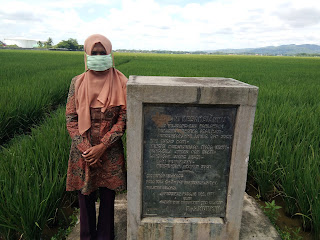 Foto saya di samping Monumen Kemerdekaan 6 Juli 1949 di Maos, Cilacap.

Prof Dr Martijn Eickhoff from NIOD visited Monument of SomaBren, slaughter 1 August 1949 in Gunung Simping or Jalan Singkep now.
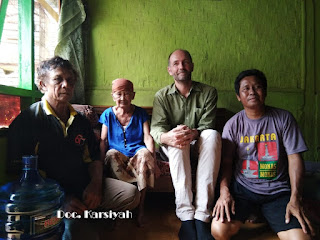
Prof Dr Martijn Eickhoff from NIOD met Mrs Jatem who still alive up to now from slaughter in Gunung Simping on 1 August 1949. He has said sorry to these family
Thank you for visiting Prof Dr Martijn Eickhoff to Monument SomaBren, Cilacap city and ruin Fort of Karang Bolong, Eastern Nusakambangan on 17-20 February 2020.
Hujan Darah di Gunung Simping, Cilacap
1 Agustus 1949
 Prof Dr Martijn Eickhoff met Arjo Mijan (83 years old in 2020) and Pak Dayat from Gunung Simping in Cilacap city on 17 February 2020.
Terima kasih saya ucapkan pada Direktur NIOD, Prof. Dr. Frank van Vree sehingga Sejarah somaBren 1 Agustus 1949 di Gunung Simping menjadi jelas.
Hujan darah ini terjadi pada tanggal 1 Agustus 1949 pukul 21.00 setelah adanya pengumuman genjatan senjata oleh delegasi RI, BFO dan Belanda di Jakarta (Cilacap Bergolak 1945-1950, Soedarmadji, Purwokerto, hal 139).
Masyarakat setempat menyebutnya dengan peristiswa SomaBren. Soma adalah nama pemilik rumah yang mengadakan hajatan pernikahan “Somadiharjo” dan Bren adalah jenis senjata yang digunakan tentara Belanda untuk menembaki penduduk sipil di Gunung Simping.
Hujan darah di Gunung Simping terjadi pada saat pernikahan tentara bernama Soepawi dengan perempuan bernama Radiem. Menurut Pak Sadiman, putra tirinya, Somadiharjo pada waktu itu hanya ketempatan tentara.
Menurut cerita, beberapa sumber menduga hujan darah ini berasal dari cinta segitiga “mata-mata Belanda” yang melihat pujaan hatinya menikah dengan Soepawi (sang tentara) dan akhirnya melapor ke Belanda.
Sejak Perang Dunia II di Cilacap 1942 sampai 1949, hajatan dengan hiburan wayang orang “Tulilan” diadakan pertama kali di Gunung Simping. Penduduk Gunung Simping beranggapan jika Indonesia merdeka sejak 1945, sehingga mereka berduyun-duyun menonton hiburan wayang orang. Mereka tidak pernah menduga adanya tragedi hujan darah yang akan menewaskan dan melukai penduduk sipil.
Pada masa Perang Gerilya kurun waktu 1945-1950 tentara di Cilacap kekurangan pangan, sehingga pemilik sawah yang luas memberikan pasokan bahan pangan, diantaranya Somadiharjo yang berasal dari Kroya, sedangkan istrinya yang mewarisi sawah luas berasal dari Gunung Simping.
Menurut cerita anak tiri Somadiharjo, Pak Sadiman yang berhasil saya temui, pada waktu hajatan memang ada sekumpulan tentara tetapi dalam suasana hajatan.
Selama Perang Kemerdekaan, Somadiharjo ketempatan tentara bernama Soepawi yang berasal dari Sakalputung. Soepawi sudah dianggap putranya sehingga dinikahkan. Pada saat menikahkan Soepawi, putra pertama Somadiharjo masih berusia 12 tahun bernama Arjo Mijan. Saat ini usia Pak Arjo Mijan berusia 83 tahun dan tinggal di Jalan Singkep.
71 tahun tragedi hujan darah di Gunung Simping berlalu. Tahun-tahun terakhir tragedi ini diperingati masyarakat sekitar monument pada malam 17 Agustus. Satu per satu korban luka dan selamat mulai wafat dan meninggalkan sejarah memilukan bagi generasi Gunung Simping yang masih peduli.
Pada sakitar tahun 1986, Bupati Cilacap waktu itu beserta jajarannya masih memperingati tragedi hujan darah di Gunung Simping. Hal ini bisa dilihat dari foto-foto yang dikoleksi keluarga Arjo Mijan di Jalan Singkep.
Sampai Pra Penelitian ini selesai, tinggal 2 orang saja yang masih hidup dari tragedi 1 Agustus 1949. Bu Kamirah, 75 tahun dan Bu Jatem, 83 tahun.
Kamirah, saat terjadi hujan darah berusia 4 tahun berada di gendongan ibunya bernama Sukiyem yang sedang hamil 4 bulan, tertembak di kepala.
Dari penelusuran catatan yang dimiliki Pak Dayat di Jalan Singkep, tidak ada nama Sukiyem, tetapi nama tersebut terdapat dalam catatan yang dirilis Drs M J Lohnstein dari Museum Bronbeek. Sukyem, usia 20 tahun, tertembak di kepala, pemakaman RawaBassoem (Rawa Pasung sekarang). Data tersebut sesuai dengan cerita Bu Kamirah yang berhasil saya temui pada masa sulit Pandemi Corona.
Sejarah Cilacap dan Belanda saling melengkapi, Sukiyem / Sukyem tidak tercatat dalam daftar korban wafat di Cilacap, tetapi tercatat di Belanda, sedangkan anak korban masih hidup di Gunung Simping, Cilacap.
Apabila kedua daftar nama korban wafat di Cilacap dan Belanda dicocokkan, keduanya saling melengkapi semua korban wafat. Dalam daftar yang dirilis Belanda terdapat perbedaan pelafalan dalam ejaan Bahasa Jawa tetapi masih bisa diterima secara umum. Menurut cerita Bu Jatem, jumlah korban wafat dan luka-luka mencapai 70 orang.
Menurut cerita Bu Kamirah, Bu Sukiyem / Sukyem pada saat tragedI hendak membeli lauk pauk, datang terakhir sampai lokasi, berada paling belakang. Kamirah yang waktu itu berusia 4 tahun “Emut-emut lali kayak mimpi” lupa-lupa ingat seperti mimpi entah dari mana "Tiyange dhuwur-dhuwur” orangnya tinggi-tinggi tiba-tiba menaruh senjata laras panjang di atas grogol “Pagar Bambu” menghujani peluru ke penduduk sipil yang sedang menikmati wayang orang. Kamirah mendengar jika tentara Belanda berteriak “Jangan lari kutembak !”.
Kamirah melihat tembakan di tengah kegelapan ibarat kunang-kunang "pating kerlip" berasap. Kamirah tidak menyadari apa yang sebenarnya terjadi. Bahkan ketika ibunya tertembak, roboh, tersungkur, Kamirah berusaha membangunkan ibunya, lalu Kamirah merosot dari gendongan, melihat orang-orang roboh, bertumbangan akibat tembakan membabi buta “Brug Brug Brug”. Darah mengucur dari badan-badan orang yang wafat dan terluka akibat tembakan. Darah di sekitar rumah Somadiharjo ibarat air hujan, “Becek”.
Kamirah kecil akhirnya meninggalkan ibunya di lokasi, tubuhnya dipenuhi darah dari kucuran orang-orang yang tertembak termasuk ibunya. Kamirah mencari rumahnya di Jalan Muria (sekarang) berjalan kaki sendirian, kedinginan akibat darah menyelimuti sekujur tubuhnya, kebingungan arah pulang, mengikuti lampu ting-ting kecil di ujung rumah dengan jarak berjauhan, berjalan melewati sawah, mengikuti pal pengingat jalan kembali ke rumahnya.
Kamirah berjalan dari jam 9 malam sampai di depan rumahnya sekitar jam 2 malam. Normalnya berjalan kaki dari lokasi pembrenan sampai ke Jalan Muria kurang lebih 1 jam.
Sampai dekat rumahnya, Bibi Kamirah terharu melihat Kamirah masih hidup. Pada waktu itu keluarga Kamirah sedang mempersiapkan lincak “tempat tidur bambu” untuk menggotong mayat Ibu Sukiyem yang sudah tergeletak di pinggir grogol.
Rambut Kamira lengket akibat darah mongering dan keesokan harinya dicukur. Menurut cerita Bu Kamirah, di tangan kanannya terdapat kucuran darah baru akibat srempetan peluru sehingga tubuhnya mendingin.
Ayah Kamirah "San Korep" berasal dari Gunung Simping juga terkena srempetan peluru di punggung. Begitu pula Bibi Kamirah berada di lokasi tetapi mereka berhasil selamat. Sayangnya saat ini mereka sudah wafat.
Kesaksian Bu Jatem pada waktu tragedi berusia 16 tahun, saat menonton hiburan baru saja melahirkan putra pertama, Pak Slamet. Bu Jatem saat ini berusia 86 tahun dan tinggal di Jalan Singkep.
Jatem saat melihat hiburan Tulilan, tiba-tiba melihat tentara Belanda menurunkan Matraliur, di onthel-onthel dengan tangan, peluru sebesar jantung “Bunga pisang” menghujani penonton yang sedang menikmati hiburan.
Jatem tanpa berpikir panjang masuk blumbang “Kubangan air” menyelamatkan diri bersama Kaki Tirsitam terserempet peluru di punggungnya. Ayah Jatem juga selamat berkat masuk blumbang.
Jatem berhasil selamat masuk blumbang dan melihat pasukan Belanda mengepung hajatan menghujani peluru secara brutal ke pononton.
Jatem yang waktu itu berada di dalam blumbang, ditarik tangannya oleh tentara Belanda, dimasukkan ke dalam rumah, berpikir rumah itu akan dibakar. Jatem berhasil kabur dengan tiarap ke rumahnya lebih dari 100 meter dari lokasi pembrenan.
Berbeda cerita dengan putra pertama Somadiharjo, Arjo Mijan, Beliau melihat pasukan Belanda datang tetapi tidak bisa menerobos pasukan untuk melapor ke kota (Tjilatjap). Arjo Mijan baru saja mengantar nasi ke rumah adiknya di Kebon Manis.
Arjo Mijan berada di rumah Ko-An tidak bisa berbuat apa-apa.
Setelah pembrenan berakhir, Arjo Mijan berpapasan dengan Komandan yang memimpin pasukan Belanda dan memberi hormat “Tabe Tuan”.
Arjo Mijan pada masa itu sebagai anggota PHB pengantar surat dari pos Republik di Gumilir ke pos Belanda di kota (Tjilatjap). Anggota PHB tidak mendapat gangguan dari tentara Belanda.
Sampai di rumah, Arjo Mijan melihat mayat-mayat tergeletak di halaman rumahnya. Beliau menuntun putra Supyan, anak tentara laut yang wafat tertembak. Dalam catatan di Pak Dayat terdapat Supyan Hadisumarto tetapi catatan di Belanda tertulis Hadisumakto.
Arjo Mijan melihat mayat Karpan terlentang di palang meja. Di sana tidak tampak orang selain anak Supyan. Tampaknya semua orang yang selamat berusaha melarikan diri pada saat pembrenan. Arjo Mijan yang waktu itu berusia 12 tahun harus menyeret-nyeret mayat yang tergeletak di halaman rumahnya.
Menurut cerita setelah pembrenan tidak ada medis dari pihak Belanda yang datang. Korban luka-luka dibawa ke rumah sakit tentara di kota (Tjilatjap) yang saat ini menjadi Rumah Sakit Angkatan Darat di Jalan Katamso atau di seberang lapangan Batalion.
Menurut cerita Bu Jatem dan Bu Kamirah, setelah pembrenan, pasukan Belanda mengelabui kota (Tjilatjap) dengan masuk ke Brug Sentul, sekarang dekat Hotel Mutiara yang lebar sungainya sudah menyempit, menjelaskan ke kota jika baru saja terjadi perang (Republik dan Belanda), padahal yang terjadi pasukan Belanda baru saja melakukan pembrenan penduduk sipil di Gunung Simping.
Somadiharjo, pemilik rumah yang melakukan hajatan berhasil selamat dari pembrenan.
Kedua mempelai pengantin, Soepawi dan Radiem berhasil melarikan diri melalui belakang rumah, berlari ke sawah dan sampai sekarang tidak diketahui jejaknya.
Thanks to Drs M J Lohnstein and Director NIOD for History of SomaBren
 Grave of E A Deighton in Gandrungmangun, Cilacap. There is a small Dutch Graveyard near Railway Gandrungmangun, Cilacap.
Baik dan buruk Belanda bagian Sejarah Cilacap.
Thank you for Cilacap from Purwokerto. Best Regards, Karsiyah
Didedikasikan untuk Almarhum Dr. H. Subiakto Tjakrawedaja, Sesepuh dan Pengayom Sejarah Cilacap.
Matur Agunging Panuwun Almarhum Dr. H. Subiakto Tjakrawerdaja, Sesepuh dan Pengayom Sejarah Cilacap yang sudah membantu saya menyelamatkan Sejarah Cilacap. Bagi saya sebagai generasi Karangsuci, Cilacap, Bapak tetaplah dikenang sepanjang hayat hidup saya sebagai orang yang sangat peduli terhadap Sejarah Cilacap. Hal ini bisa saya rasakan pada saat hari-hari terakhir Bapak yang masih memberikan semangat dan dukungan tanpa saya sadari Bapak berjuang melawan maut.

Pemakaman Karangsuci di kota Cilacap menjadi saksi bisu Bapak masih dikenang penduduk sekitar meski Bapak telah meninggalkan kami semua.
Selamat Jalan Sesepuh dan Pangayom Sejarah Cilacap.
Foto saya di sekitar komplek Pemakaman Kuno Donan di Jalan Bogowonto Rt 03 Rw 08, Donan, Cilacap.
Sebagian Surat Keterangan Lahir saya di Donan, atau sekarang Jalan Karangsuci, Donan, Cilacap.
CILACAP (TJILATJAP)
HISTORY FOR ALL OF US
An about history, it's always the interpretation of the next generations who alters it. A lot of people in The Netherlands and in Indonesia know it wasn't all bad. We should learn from the mistakes and go further. It would have been nicer if our governments would have worked more positively together in the past. It would have been better for Indonesia and better for The Netherlands. Wibo and Karsiyah

Cilacap's Harbour (Lomanis 1992-2004, local people said it)as a transit harbour for international tourists from Pangandaran Beach, West Java to Yogyakarta. I met friendly international tourists who taught me their languages on the ferry from Cilacap's Harbour to Ujung Alang Village in the middle large estuary of Segara Anakan lagoon.
I was so happy to meet international tourists on the ferry from Cilacap Transit Port to Ujung Alang Village, Central Java during 1992 - 2001. I studied foreign languages with them at the side of the ferry and it was difficult to imagine the intensity of the sun on those afternoons. The air was fresh and the waters similarly calm. All of this seemed so beautiful.

My photo with a German tourist (Architect)on the ferry in front of quay Motean, Ujung Alang Village, Kecamatan Kampung Laut in 1994. In front of us tourists from Germany, The Netherlands and USA.

European tourists transited in Sleko, Cilacap.
Thank you for your visit and transit in Cilacap
Jay Alan Bauer from US (Purwokerto, October 28th 1992)
Yvonne Jansen from Holland (Cilacap, December 28th 1992)
Ian Carrau from England (Cilacap, March 18th 1993)
Michael from Holland (Cilacap, June 17th 1993)
Benny from Sweden (Cilacap, February 12th 1994)
Kolumela from Germany (Cilacap, April 5th 1994)
Tony from England (Cilacap, May 3rd 1994)
Rajawali from Holland (Cilacap, June 24th 1994)
Paul from Holland (Cilacap, June 24th 1994)
Herve from French (Cilacap, July 16th 1994)
Julia Escher from Germany (Cilacap, July 16th 1994)
Judith and Tom from Germany (Cilacap, July 1994)
Sara Bailey and Steve from England (Cilacap, July 1994)
David and Philip from England (Cilacap, July 1994)
Hubert Lauener from Switzerland (Cilacap, July 1994)
Richard Raynor from England (Cilacap, November 1994)
Dos Santos Romeo from Switzerland (Cilacap, March 25th 1995)
Naomi Frank from Switzerland (Cilacap, June 26th 1995)
Arjen Poortman from Holland (Cilacap, June 27th 1995)
Simone Hugo from England (Cilacap, June 28th 1995)
Sharon Baker from England (Cilacap, June 29th 1995)
Delyth Burn from Wales (Cilacap, July 20th 1995)
Wiebke Fabinski from Germany (Cilacap, July 21st 1995)
Alexander R.C. Cox from England (Cilacap, July 24th 1995)
Marcel Brounne from Holland (Cilacap, March 3rd 1996)
Michelle and her friends from England (Cilacap, May 9th 1996)
Peter Courts from England (Cilacap, June 30th 1996)
James Smith from England (Cilacap, July 30th 1996)
Crude from Denmark (Cilacap, November 30th 1997)
Jose E.Nierop from Holland (Cilacap Transit Port)
Mandy Wevelkate from Holland (Cilacap Transit Port)
Jan Baker from England (Cilacap Transit Port)
Erik Doves from Holland (Cilacap Transit Port)
Christina Prochilo from USA (Cilacap, February 10th 1998)
Steve from US (Cilacap, January 17th 1998)
James Pritchett from England (Cilacap, Mar6ch 1st 1998)
Adam from Australia (Cilacap, November 18th 1998)
Lisa Wamslay from England, (Cilacap Transit Port)
Laura Schmale from Germany (Cilacap, August 30th 1999)
Sebastian Fricke from Germany (Cilacap, October 3rd 1999)
Simon Witt from Germany (Cilacap, September 29th 1999)
Rob Wall from New Zealand (Cilacap, January 21st 2001)
Judith from Germany (Cilacap, May 31st 2001)
Bill Murphy from England (Cilacap, September 30th 2001)
Sarah Wastiaux from Holland (Cilacap Transit Port)
Thorbojrn R. Johansen from Norway (Cilacap-Purwokerto)
Han Jung Seung from South Korea (Cilacap Transit Port)
Charlotte Peeters from Holland (Seleko in Cilacap)
Martin Lukas from Germany (Purwokerto, May 20th 2008)
Thank you very much for teaching me your languages in Cilacap and especially for British Tourists who taught me to write articles in English since 1996 and corrected them from time to time so I could communicate Historical sites in Cilacap.
Mengapa selama tahun 1992 - 2001 wisatawan mancanegara hanya transit di Pelabuhan Penyeberangan Cilacap ? Selayaknya dengan banyak peninggalan sejarah kolonial wisatawan mancanegara bisa berkunjung ke Cilacap.
Special Thanks to Peter Courts from England.


Thank you very much for all officers in Cilacap Transit Port especially in Lomanis during 1992 - 2001. Thank you very much for giving permit to generations near Cilacap city to study foreign languages with international tourists in Cilacap Transit Port. I miss you all now.
After 2004, international tourists transited in Cilacap's harbour, local people said Seleko, it is about 1 km in the west of Town Square Cilacap city.
Cilacap Regency is located in the South of the Province of Central Java with area of 225.360,840 ha. Cilacap city is the capital of Cilacap Regency. It is a region growing very fast due to its strategic position in regard to the development of the industrial sector. Cilacap city is bounded by Indian Ocean in the east, Nusakambangan strait in the south and Donan river in the west.
The administrative region of Cilacap city has been designated as a centre of industrial development for the southern part of Central Java. The land in this area reaches a height of only 1 (one) meter above sea level, thus the climate is quite hot.
Cilacap is Tjilatjap
Blz. 404, r.3 v.o.,,Tjélatjap” De officieele schrijfwijze is Tjilatjap, verkeerdelijk al seen Soendaneesch woord opgevat. Ten rechte is het echter Tlatjap, hetwelk betekent: een scherpe hoek of punt (namelijk in een plat vlak, gelegen), en blijkbaar wijst op eene landtong, in casu die waarop de kusbatterij gebouwd is. In de Vorstenlanden is dit woord o.a. in gebruik voor de bekende punten in het patroon van sommige statie-pajongs (zonneschermen van verschillende kleur, groote aanteekening, welke den rang aanduiden van de personen, wien zij worden nagedragen), en van de ‘kepala’ van gebatikte kains en sarong. Zie ook blz. 411 1).
Op- blz 411 en noot 2 aldaar besprak ook ik reeds den ware vorm van den naam der plaats die ten onrechte doorgaans Tjilatjap wordt geheeten. Daar word took gesproken van de vormen Tjatjap en Tjelatjap (welke laatste van Tjlatjapniet wezenlijk verschilt). Wie de aangehaalde noot vergelijkt met deze aanteekening van den Heer de Wolff zal begrijpen, waarom ik thans niet meer twijfel of Tjilatjap is de ware vorm en Scherpehoek de ware vertaling daarvan. P.J.V.
Harbors
There are 4 (four) harbors around the city itself ; Seleko Tourist Harbor, Tanjung Intan Harbor, Wijayapura Harbor and Samudera Perikanan Nusantara Harbor. Each of these harbors has different functions; Seleko Tourist Harbor is used to serve the domestic maritime tourist industry to travel Cilacap city and this harbor is used also to connect many small villages between Cilacap and West Java such as Ujung Alang, Klaces and Majingklak. Tanjung Intan Harbor is a commercial harbor for the loading and unloading of export or import good. Wijayapura Harbor is used to connect Cilacap city with Nusakambangan as The Prison Island. Samudera Perikanan Nusantara Harbor is the center for the local fishing industry.
Tour Cilacap In The Night

Tour in Kampung Laut, Segara Anakan

Center of Fish Salting and Drying in The South Coast of Central Java

Fish salting and drying in Cilacap city has been practicing for hundreds of years. As other traditional fish processing, is an important economi8c activities in Cilacap communities. It provides employment opportunities, adds value to products, improve fishermen's income and as multiplier efforts an economic activities in Cilacap.
Beautiful Sunset in Sleko

If you want to enjoy beautiful Sunset in Sleko, you could go on a walk to the west from Town Square Cilacap, it takes 30 minutes.
Benteng Pendem
Fort in The Peninsula of Cilacap (Kustbatterij op de Landtong te Tjilatjap in Dutch) was a defense system in the South Coast of Java. In 1942 this defence system had important function for ABDA Command in The Second World War.

Based on document a map from The Netherlands in 1988, total area of fort in Cilacap was 10.5 ha. Because of development for Pertamina Cilacap, Fort in the Peninsula of Cilacap now is 6,5 ha. Local people called this fortress by Benteng Pendem and they were building 1861-1879. There were many rooms such as Prison Room was built in 1861, Tunnel was built in 1868, Accommodation Room was built in 1869, Observation Room was built in 1873, Barrack Room was built in 1877, Clinic Room was built in 1879, A place for firing in short and long distance, Weapon Space, Kitchen Room, and The Moat. Benteng Pendem is about 2 km in the Southeast of town square Cilacap.

My photo at the gate of Kustbatterij op de landtong te Tjilatjap (Benteng Pendem).

My photo near a room for military officers in Benteng Pendem.

Reconstruction Ruin Dutch Fort in Cilacap city.
Fort of Karang Bolong and Cimiring
In The Eastern of Nusakambangan

In 1819, 30 artillerists were stationed in the eastern Nusakambangan. After The Diponegoro War, In 1836 Dutch government build Fort of Karang Bolong and Banju Njappa in the eastern Nusakambangan with total area 0,6 ha.
The battery Karang Bolong is situated on the north eastern corner on a rock .This battery serves prevent access to the bay of Cilacap by hostile ships and to extend the fire as far as possible should they wish to turn this way. The base of the stronghold has been hewn from the rocks and is armed with forty - sixty pounders cannons. The armoury and storehouses for dress and provisions also cut from the rocks and have been connected internally by tunnels and state.
On the north coast of the island is the fortress Banju Njappa, a coastal battery armed with 14 eighty pounders and fenced off at the back by a shellproof redoubt with a crenellated wall which can shelter up to 150 men.
If you want to go there, you should go by canoe from Benteng Pendem and it takes 15 minutes to the gate of the eastern Nusakambangan. From the gate, you should go on a walk, it takes 20 minutes and it is about 1 km in the east in the tropical rain forest.

Minggu Kliwon 27 Juli 1947
(a) Kesaksian Dr. Koestedjo :
Bagi orang yang mengalami sendiri agresi seperti dikisahkan dr Koestedjo (1996:79) khususnya dan orang-orang lain yang mengalaminya umumnya,, terjadinya serangan udara pesawat terbang Belanda pada benteng – benteng Karangbolong dan Cimiring pada hari Minggu Kliwon tanggal 27 Juli 1947 maupun tembak – menembak antar kapal perang Belanda dengan meriam-meriam kita di perairan Teluk Penyu sehari sebelumnya, merupakan salah satu peristiwa yang tidak dapat dilupakan seumur hidup.
Dr. Koestedjo selanjutnya mengatakan, bahwa pada pagi hari itu ia menuju ke Nusakambangan. Saya berada di sana bersama beberapa para opsir AL dan Bat. Artileri AD, untuk panggilan yang sangat urgen (mendadak), di sekitar Pos Baterai Karang Bolong dan Cimiring. Dua opsir yang dikenalnya adalah May.Ch. Wowilling dan Opsir PT (Polisi Tentara) AL Soenarto Kolopaking. 6
Pos-pos itu telah mengalami perbaikan pada jaman Hindia – Belanda dan Jepang. Di sini terdapat perbentengan yang cukup andal dengan meriam-meriamnya, hanya sayangnya senjata penangkis udara. Persenjataan pos-pos tersebut:
1. Pos Baterai Karang Bolong yang letaknya tepat di depan mulut masuk pelabuhan dengan meriam terbesar, kaliber 15 cm.
2. Pos Cimiring yang terletak di tengah dengan 3 pucuk meriam dengan ukuran agak kecilan, terletak di atas bukit.
3. Pos Babakan, yang terletak di pantai sebelah selatan Desa Adipala, sebelah timur Kali Serayu dengan sepucuk meriam 7,5 cm.
Pagi-pagi datang lagi dua kapal Belanda yang diperkuat 5 pesawat pemburu dan 4 pesawat pembom. Serangan udara berlangsung sampai tengah hari. Serangan ini berlangsung sampai tengah hari, hanya sayang tiada senjata penangkis serangan udara.
Dalam keadaan panik semua prajurit mencari perlindungan dimana saja. Di Pos Cimiring ada bom yang tepat jatuh tengah mengenai lubang perlindungan. Karena dahsyatnya tekanan udara, pintu-pintu tempat perlindungan mengalami kerusakan. Dengan demikian karena tiupan angin yang keras hampir semua lorong di dalam benteng dipenuhi dengan asapnya yang hitam tebal.
Prajurit-prajurit yang tidak sempat menemukan perlindungan dalam sekejap saja telah dimakan api, roboh dan tidak bernyawa lagi. Puluhan korban mengalami nasib seperti itu tanpa dapat diidentifikasi lagi. Seluruh badan menghitam dan sudah menjadi arang. Hanya tinggal gesper ikat pinggang yang terbuat dari logam yang masih menempel pada badannya. Sungguh mengerikan.
Setelah keadaan menjadi aman kembali, semua korban dimakamkan secara massal di dekat benteng. Mereka semua sudah tak dapat dikenali lagi. Para korban luka bakar berat berjumlah tujuh belas orang diangkut ke Cilacap dan dirawat di tempat perawatan tentara resimen yang saya pimpin 7. Yang tidak bernyawa lagi, dengan tergesa-gesa dikubur tidak jauh dari Karang Bolong. Dr Koestedjo meninggalkan Nusakambangan pada hari itu juga.
Soedarmadji, Dr., Cilacap Bergolak 1945-1950, Purwokerto, halaman 70-71.
Rabu 30 Juli 1947
Sekitar pukul 08.00 datang lagi serangan kapal terbang pemburu yang diikuti kapal terbang pembom terhadap Pos Karang Bolong dan Cimiring. Kapal JT 1 juga mulai menembak. Pemboman dari udara juga terus berlangsung sampai pukul 16.00 dengan bom-bom rata-rata berukuran berat 100 kg. Ada juga bom yang tidak meledak dan bom yang tepat pada meriam pucuk dua Pos Cimiring.
Soedarmadji, Dr., Cilacap Bergolak 1945-1950, Purwokerto, halaman 74.
Kerkop Cilacap 1852 – 1952
Tjilatjap kerkhof / Kerkop Cilacap / Cilacap Cemetary
Tjilatjap kerkhof (Kerkop Cilacap in Indonesian or Pakuburan Kristen Cilacap in Javanese) is located on Jalan Karang in Cilacap city. It is about 300 m in the north of ex Dutch Fort in The Peninsula of Tjilatjap.

These graves are still up to 7 April 2016 in Cilacap city:
1. Therese von Lutzow
2. Toontje Poland (Tjilatjap 19 December 1857)
3. JCB Th Nedermeijer (Tjilatjap, 2 November 1876)
4. SP van Kakum (Tjilatjap, 18 April 1869)
5. PH M. Regensburg (Tjilatjap, 23 Juli 1888)
6. WG Strielack (Tjilatjap, 2 Juli 1877)
7. Dr. Thomas Cornelus (Tjilatjap, 20 Augustus 1868)
8. M. Herz (Tjilatjap, 22 Mei 1909)
9. AJ Voet (Tjilatjap, 17 Februari 1884)
10.JM Romijn (Tjilatjap, 31 Mei 1883)
11.Louis van Rhoon (Tjilatjap, 26 Juli 1907)
12.Gasper Mathys (Tjilatjap, 27 April 1889)
13.Oscar Kuhr (Odense, Denmark, 5 Mei 1848 - Tjilatjap, 24 December 1886)
14.Henriette Cornelisa Elisabeth de Bie
15.Elisabeth Henriette Theodore van der Eb (Tjilatjap, 22 December 1872)
16.CM Wedding (Tjilatjap, 20 Januari 1880)
17.JDG Heins Wedding
18.CMF Sieburg (Tjilatjap, 30 Juni 1893)
19.Pauline Amalia Barnaart (Tjilatjap, 18 Februari 1872)
20.Talahati
21.M Tapiheroe (Tjilatjap, 7 Augustus 1882)
22.J Palappa (Tjilatjap, 25 Januari 1892)
23.Caroline Charlotte Popje (Tjilatjap, 19 Maart 1862)
24.Dr Willem Smith (Tjilatjap, 27 September 1903)
25.MMA Wijnmalen (Tjilatjap, 8 Juli 1916)
26.MH Heijen (Tjilatjap, 18 Januari 1887)
27.Emile Rudolf August (Tjilatjap, 19 Augustus 1865)
28.Pieter Johannes du Perron (Tjilatjap, 5 Januari 1899)
29.Johanna Lucretia Hendrik de Quartel (Tjilatjap, 21 Juli 1875)
30.Henriette du Perron (Tjilatjap, 26 Augustus 1875)
31.JW Luders & Louisa Lemaistre (Tjilatjap 3 November 1899 - 7 Januari 1870)
32.Siegeried Stern (Tjilatjap, 30 September 1909)
33.Emile Theodore Gustaaf (Tjilatjap, Mei 1887)
34.Adolf Pieters (Tjilatjap, 1 Mei 1903)
35.AN Pieters (Tjilatjap, 16 November 1908)
36.J Mannot (Tjilatjap, 25 December 1876)
37.Alexander Karel Gerhard Ruerslag (Tjilatjap, 4 October 1910)
38.Josef Wulfran (Tjilatjap)
39.T. Boon (Tjilatjap, 18 November 1900)
40.CE van Doorn (Tjilatjap, 7 Maart 1898)
41.EM Kinski (Tjilatjap, 12 Februari 1903)
42.Josephine de la Combe (Tjilatjap, 18 Mei 1892)
43.Julia Sophia Elisabeth de Bie (Tjilatjap, 10 October 1879)
44.BEC Spreutels (Tjilatjap, 26 October 1877)
45.JC Huffenreuter (Tjilatjap, 20 November 1905)
46.Martinus Ferdinand Anton Perk (Tjilatjap, 18 Februari 1882)
47.Gouverd Hendrik van Rossum
48.Johan Christian Doderlein de Win (Tjilatjap, 28 November 1930)
49. Jeannete Elisettle Doderlein de Win (Tjilatjap, 27 Mei 1939)
50.E Maria, 3 - 3 – 1971
51.JWF Scott (Tjilatjap, 24 Juni 1870)
52.JM Schoon (Tjilatjap, 10 November 1865)
53.ERTJ von Ende (Tjilatjap, 15 Mei 1883)
54.Caroline Marya Catherina Martherus (Tjilatjap, 17 Juni 1886)
55.Antoinette Elisabeth Evers (Tjilatjap, 4 Februari 1893)
56.F.H. Kreitzer (Tjilatjap, 22 Februari 1892)
57.JW Selschom (Tjilatjap, 16 Juni 1897)
58.LWA Baertmans (Tjilatjap, 22 Mei 1887)
59.Maria Louisa Werdmuller von Elgg (Samarang, 15 October 1939)
60.Rudolf Werdmuller von Elgg (Tjilatjap, 27 Januari 1911)
61.JWC Marleen (Tjilatjap, 7 Maart 1886)
62.Johannes Willem Frederik Marleen
63.Dorothea Carolina Alexandrina (Tjilatjap, 12 October 1873)
64.Hendrik Oscar van Lichten (Tjilatjap, 27 April 1900)
65.CMN ORDT (Tjilatjap, 1 Maart 1881)
66.R. Tagah
67.AWJ Lehnhausen(Tjilatjap, 3 Januari 1884)
68.Joh. Kellner
69.JT Bello (Tjilatjap, 24 Maart 1877)
70.Juliana Elisabeth De Sornie Geb. Vincent (Tjilatjap, 5 April 1882)
71.Sara Gosina Rikamahu, Maos 10 October 1909
72.Johan Stekkinger, Tjilatjap 8 December 1875
73.Johanis Tangkeri
74.JPJV PVAL
75.A van der Voort (Tjilatjap, 31 Juli 1909)
76.Eric van Es (Tjilatjap, 25 Januari 1920)
77.C. Krabbe (Tjilatjap, 22 October 1876)
78.Carel Johannes Cornelis (Tjilatjap, 8 Juli 1913)
79.I. Supit (Tjilatjap, 7 Maart 1939)
80.HAK Boers (Karanganjar, 11 November 1919)
81.DEC Ravestelyn (Tjilatjap, 2 September 1864)
82.J Feher
83.Henri Fieves de Malines (Tjilatjap, 22 November 1863)
84.Van Ida Quenline Boudjard (Tjilatjap, 14 Februari 1904)
85.Engelsch
89.Oivind Morner Larsen (Bergen, Norway, 26 November 1890 - Tjilatjap, 4 Juli 1908)
90.WC Sastroud (Tjilatjap, 7 Januari 1879)
91.Abraham Richard Seigies
92.HEPBC Baermayer von Barienkhofen (Tjilatjap, 2 April 1919)
93.Mevrouw HE Lopens (Tjilatjap, 19 Maart 1886)
94.JWDA Mac Gillavry (Tjilatjap, 12 Februari 1876)
95.Frans Leender
96.Theo de Scheemaker (Tjilatjap, 7 Juni 1903)
97.Egbert de Jong (Tjilatjap, 11 December 1952)
98.Johanna Sarini (Noesa Kambangan, 1 April 1939)
99.J Roemonaer (Tjilatjap, 8 Juli 1964)
100.R Broesma (Tjilatjap, 22 Februari 1917)
101.G Messak (Tjilatjap, 8 Mei 1929)
102.Frederik William Croove
103.Nanne Olthuizen
104.Ernst Wilhelm August Hildebrandt (Koslin, Poland 22 Januari 1868 - Tjilatjap, 14 Februari 1924)
105.Augustina Emilia Walla (?)
106.Caroline Paat (Tjilatjap, 18 April 1938)
107.Karel Ebnest
108.Laitenu
109.Jan Rapar, Tjilatjap 26.10.42
110.Mevr. Hermina Ayal, Oktober 1945
111.Rosina Albertina Ayal, 1976
112.Father van Ayal, 19-05-1942
113.Lodewyk Cornelis Hangi, 3-7-1945
114. Margaretha Maria Sanimah Hangi
115. Jeannette Fugeny Hangi, 10.2.1946
116. M. P. Koster (Tjilatjap, 31 Mei 1901)
117. Amelia Christine Koster
Your visit will help to save these Dutch broken graves.
For generations from people who buried in Tjilatjap kerkhof / Kerkop Cilacap / Cilacap cemetary, if you want to visit this graveyard, please contact local officers in Cilacap especially to Mr Bambang Aryo in Cilacap. Thank you very much for your coordination.

Hoofdstuk V
De Strid in Midden-Java
(Zie kaarten nrs 1,6 en 7)
De militaire betekenis van Midden-Java en de beschikbare troepen bij het uitbreken van de oorlog met Japan (December 1941).
Pagina 116
4 Maart
Tjilatjap werd op 4 Maart te 10.00 door 19 bommenwerpers gebombardeerd. Het bombardement duurde ongeveer 1 uur, waarbij de begeleidende jachtvliegtuigen de opstellingen van het Britse luchtdoelgeschut en de haven;oodsen mitrailleerden. Na afloop van de Japanse aanval bleken de personele en materiele verliezen mede te vallen. De koelies uit de haven waren echter gevlucht en keerden niet terug.
De Britse luchtdoelbatterijen hadden zich goed geweerd: zij schoten 2 bommenwerpers en 1 jager af.
In de namiddag wierp een Japans vliegtuig een bom op de divise-commandopost te Wangon, waardoor enige personen warden gedood en gewond. De commandopost werd hierna enige kilometres naar het western verplaatst.
De vliegveld-bescherming van her vliegveld Banjoemas werd inetrokken. Het groepje landstormers, dat hierdoor vrikwam kreeg opdracht bij een brug, even ten noorden van Adjibarang, de weg aft e sluiten.
5 Maart
Te 11.00 onderging Tjilatjap opnieuw een bombardement. Ditmal werd het bombardement uitgevoerd door 27 bommenwerpers. Het bombardement duurde 2 uren, na afloop waarven de schade kon worden opgnomen. Deze was enorm. Het station lag in puin, de haven was volkomen vernield en de loodsen stonden in lichter laaie. De in de haven aanwezige schepen waren gezonken of zwaar beschadigd.
De Britsche luchdoelartillerie had zich opnieuw goed geweerd en 3 bommenwerpers en 2 jagers neergeschoten. Ook de personele verliezen waren zwaar: het aantal slchtoffers bedroeg circa 450, voornamelijk burgers.
SUMMARY
THE STRUGGLE IN JAVA
General
3. The harbour of Tjilatjap which was important because of the fact it was the only suitable port on the south coast of Java. If the Java Sea would have been fallen into the enemy hands, Tjilatjap would be the only port of access left. Page 167
The Struggle in Middle Java
Tjilatjap was heavily bombed on 4 and 5 March 1942 and had therefore lost its importance as a port. Page 168
Tjilatjap, 5 March 1942
On 5 March 1942, a 180 plane strike was launched from our carriers against the south Javanese port of Tjilatjap, netting a bag of about 20 ships sunk. In addition, up to 5 March, 3 enemy destroyers and 14 transports were sunk trying to escape southward, and 3 other transports were captured. The landing operations meanwhile went off on schedule, and on 9 March 1942 Java surrendered. The Nagumo Force returned to Staring Bay to await orders.
Mituso Fuchida (Former Captain, Imperial Japanese Navy) and Masatake Okumiya (Former Commander, Imperial Japanese Navy). MIDWAY. The Battle That Doomed Japan, The Japanese Navy’s Story. United States Naval Institute; Annapolis. Page 40
Cilacap Bergejolak 1945-1952

Epitaph from Egbert de Jong buried in Tjilatjap kerkhof on 11 December 1952. The vessel he worked on a chief engineer was motor vessel Mapia from company Stoomvaart Maatschappij Nederland.
Diintisarikan dari Buku Cilacap Bergejolak 1945-1950 yang disusun oleh Dr. Soedarmadji di Purwokerto. Ketua Yayasan Pesarean Dawuhan.
Pada tanggal 12 Juli 1706 di Donan (kini : nama daerah dalam kota Cilacap) dua orang Bupati Pribumi, yaitu Bupati Tegal dan Brebes atas nama Kerajaan Mataram menandatangani perjanjian dengan Kumpeni Belanda yang disebut Akte Batas Pemisah. Bupati Banyumas tidak dilibatkan, mungkin memang bukan wilayahnya. Istilah yang digunakan adalah Kumpeni mendapat pinjaman tanah untuk dikelola, sebagai upah bantuannya dalam mengatasi pemberontakan dalam kerajaan.
Nama Cilacap baru muncul awal abad XVIII ketika tanah tersebut dilanda serangan bajak laut dari luar pulau. Bagian timur cikal bakal Kabupaten Cilacap baru dijadikan jajahan Pemerintah Belanda pada tahun 1830 (disahkan pada tanggal 22 Juni), ketika tanah itu digunakan sebagai ganti rugi / upah bantuannya dalam mengatasi Pemberontakan Diponegoro 1825-1830. Sejak akhir abad XVIII Kumpeni diambil alih Pemerintah Hindia-Belanda.
Pemerintah Hindia-Belanda kemudian mengembangkan Desa Perdikan Donan menjadi Kota Kepatihan Cilacap, yang berkembang menjadi Kabupaten pada tahun 1856, yang kini menjadi Hari Jadi Kabupaten Cilacap.
Keruntuhan yang cepat dari kekuasaan Belanda ketika menghadapi Jepang dalam Perang Dunia II pada tahun 1942, bagi banyak orang telah menghancurkan kredibilitas Belanda sebagai penguasa kolonial maupun keabsahan tuntutan mereka terhadap wilayah yang sudah hilang seusai perang.
Dalam Perang Dunia II, Cilacap pada tanggal 3-5 Maret 1942 salah satu kota sasaran strategis terakhir di Jawa yang mendapat serangan paling hebat dari berbagai Armada Kapal Induk Jepang yang melibatkan 200 pesawat tempur. Kisah ini diceritakan perencana operasi tersebut yang selamat dari hukuman perang dan menduduki jabatan ting. gi pasca operasi perang, yang menyebabkan didudukinya Pelabuhan Cilacap sebagai gong penutup dari Penaklukan Jawa.
Pada tanggal 8 Maret 1942, Hindia Belanda takluk kepada Pemerintah Dai Nippon (Jepang), sejak itu Cilacap menjadi bagian dari pemerintah militer Jepang yang disebut Pemerintah Balatentara Dai Nippon di Djawa.
Kekecewaan terhadap tentara pendudukan Jepang serta pertumbuhan perasaan anti Jepang dari mana gerakan kebangsan Indonesia makin banyak kemampuan untuk menarik dukungan dan kekuatannya. Dalam kekejaman dan kebengisan rezim Jepang telah banyak mendorong diantara kita supaya mempertabah diri menghadapi perjuangan yang akan datang.
Kekuasaan Jepang berakhir kita anggap secara de jure berakhir dengan kekalahan Jepang yang diikuti Proklamasi Kemerdekaan tanggal 17 Agustus 1945, de facto Pemerintah RI Karesidenan Banyumas diambil alih, sehari setelah demo raksasa di Rumah Dinas Residen Jepang Purwokerto dengan resolusi yang disetujui Residen Jepang pada hari Senin tanggal 25 September 1945. Dengan demikian otomatis terjadi perubahan status dari Pemerintah Dai Nippon kepada Pemerintah RI di Kabupaten Cilacap.
Masalah yang kita hadapi tidak sederhana seperti ini, ternyata Pemerintah Hindia Belanda secara yuridis internasional menuntut hak mewarisi bekas jajahannya. Kita bangsa Indonesia tidak dapat menerima alasan itu. Sejak waktu itu kemerdekaan kita harus kita perjuangkan, baik dengan perundingan maupun pertempuran.
Kemenangan Indonesia dalam perjuangan kemerdekaan melawan Belanda dimantapkan dalam KMB (Konferensi Meja Bundar) tanggal 23 Desember 1949, yang berlaku sejak tanggal 3 Desember 1949. Secara de jure berakhirlah sudah kekuasaan Belanda di Cilacap sejak Perjanjian Donan tentang Akte Batas Pemisah pada tanggal 12 Juli 1706.
Periodisasi Cilacap Bergejolak 1945-1950 akan dibagi dalam dua jaman berdasarkan status pemerintah daerah yang berkuasa di kota Cilacap, tanpa megesampingkan Pemerintah Gerilya dan Pemerintah Militer RI dalam pengungsian. Pembagian yang lazim digunakan kalangan awam yang hidup pada masa itu;
I. Jaman Merdeka, sejak Proklamasi RI 17 Agustus 1945 sampai kota Cilacap diduduki tentara Belanda tanggal 2 Agustus 1947.
II. Jaman Pendudukan, sejak kota Cilacap diduduki tentara Belanda pada tanggal 2 Agustus 1947 sampai dengan Penyerahan Kedaulatan RI 27 Desember 1949.
Proklamasi RI ternyata tidak segera diketahui di daerah, orang tenang-tenang saja. Para pejabat pangreh praja, seperti Asisten Wedana, Wedana, Bupati juga tidak tahu. Berita radio dan surat kabar disensor pemerintah militer.
Kepala BKR Kabupaten Cilacap
Yang ditunjuk sebagai Kepala BKR Kabupaten Cilacap adalah Abimanjoe (ex Tyoodantyoo) dan wakilnya Soegeng (ex Syoodantyoo) Daidan Banyumas I di Cilacap di bawah pimpinan Daidanntyoo R. Soetirto. Abimanjoe kemudian segera ditarik ke Kantor Pusat Daerah Banyumas di Purwokerto. Keduanya juga menjadi angggota KNI Kabupten Cilacap.
Pada tanggal 28 September 1945 dibentuk BKR Laut Cilacap yang didalamnya termasuk para anggota Korps Staf Intendans.
Pembentukan TKR (Tentara Keamanan Rakyat)
Kota Cilacap (tempat lahir saya) adalah satu-satunya kota pelabuhan di Pantai Selatan Jawa, maka TKR Cilacap disusun dari 2 angkatan, yaitu angkatan darat yang disebut TKR saja, dan angkatan laut yang kita kenal dengan TKR Laut. Pada tanggal 26 Maret 1946 nama TKR Laut diganti ALRI (Angkatan Laut Republik Indonesia).
TKR Laut Resimen Cilacap
Pada tanggal 1 Jaanuari 1946 Pelabuhan Cilacap ditetapkan sebagai Pangkalan TKR Laut, lengkap dengan struktur organisasi dan personalia. Kolonel Kadjt Asmadi sebagai Kepala Pangkaan, sedangkan Letnan Kolonel Soeparlan sebagai Kepala Staf, kemudian digantikan Letnan Kolonel R. Slamet Hardjodipoero.
TRI DIVISI CIREBON
Resimen XV Cilacap dipimpin oleh Letnan Kolonel Abimanjoe, Ex Ajudan PB TRI
Divisi II Sunan Gunung Jati Purwokerto, 5 Oktober 1946
Komandan Resimen XV Cilacap dipimpin oleh Letnan Kolonel Abimanjoe, Ex Ajudan Panglima Besar TRI.
Perundingan Cease Fire di Front Bandung Selatan
Perundingan genjatan senjata di Front Bandung Selatan dilangsungkan pada tanggal 22 November 1946 di Dayeuhkolot, penetapan garis demakrasi gagal pula. Perundingan pada tanggal 29 November 1946 juga tidak memberikan hasil, karena musuh menuntut berbagai tempat yang tidak pernah didudukinya. Tuntutan itu ditolak oleh delegasi kita yang terdiri dari Letnan Kolonel Abimanjoe, Komandan Resimen Cilacap, dan Letnan Kolonel Soetoko. Belanda berpegang pada tanggal 14 Oktober 1946 sebagai saat statusquo, sedangkan pihak kita tidak mempunyai perintah statusquo pada tanggal itu (Nasution, 4, 1976:204).
ALRI PANGKALAN XII CILACAP
TRI Laut Pangkalan Cilacap mengalami reorganisasi dan ditingkatkan menjadi ALRI Pangkalan XII Cilacap, tidak dibawah komando MBU (Markas Besar Umum) ALRI, tetapi langsung di bawah Kementrian (KKO, 1971;46-47;TNI AL, 1973;231ff).
Pangkalan Cilacap sebagai satu-satunya pelabuhan di Pantai Selatan Jawa perlu diperkuat. Setelah terbentuk pangkalan tersebut, dipandang perlu membentuk instansi TL (Tentara Laut) dengan Komandan Letnan Kolonel K. Syarif.
MANTAN PERDANA MENTERI SYAHRIR DI CILACAP
Dua hari setelah Syahrir meletakkan jabatan pada tanggal 27 Juni 1947, rombongan Residen Banyumas, yaitu Boediono meninjau daerah Karesidenan Banyumas dan sekaligus memberi kesempatan bagi Syahrir untuk istirahat. Pertama kali mampir di Cilacap di rumah Bupati Cilacap.
PERANG KEMERDEKAAN
Pelanggaran Cease Fire
Kegiatan pelanggaran cease fire dalam seluruh wilayah RI di Jawa dan Sumatera meningkat pesat meskipun telah ditandatangani Perundingan Linggarjati pada tanggal 25 Maret 1947.
Daerah teritorial TNI Resimen XV Cilacap yang meliputi Kabupaten Cilacap, serta Kawedanan Banyumas dan Sumpyuh dari Kabupaten Banyumas, sering mengalami pengintaian udara. Juru bicara tentara di Yogyakarta menyiarka pandangannya bahwa dalam jangka waktu antara tanggal 6 - 12 Juli 1947 dalam daerah tanggungjawab Resimen Cilacap saja, terjadi pelanggaran cease fire sebagai berikut (Nasution, 5, 1978;76):
Jauh di pedalaman dilakukan pengintaian-pengintaian, yaitu di atas kota Cilacap dan daerah Banyumas (Wanareja, Kawunganten, Jeruklegi, Maos, Buntu, Babakan dan Syumpuh). Di darat tidak terjadi insiden. Satu kali Pantai Cimiring ddekati sebuah kapal perang Belanda.
Pada tanggal 16 Juli 1947 bersamaan dengan munculnya sebuah pesawat terbang Belanda di Cilacap, sebuah kapal perang Belanda yang berada di sebelah selatan Cimiring melepaskan sejumlah tembakan, tetapi tidak dibalas oleh pihak kita. (Nasution,5,1978;73)
Pada tanggal 21 Juli 1947 Belanda memulai serbuannya ke Cilacap, Mayor Jendral John Lie, Syahbandar Pangkalan TNI AL XII Cilacap (Nasution,6,1978;392) sedang memandu Kapal Inggris Empire Tenby dari Hongkong yang hendak keluar pelabuhan habis menurunkan pakaian dril biru tua dan memuat hampir 500 ton hasil bumi kita.
Pada tanggal 22 Juli 1947 pukul 08.10 sebuah pesawat terbang pembom B25 Belanda menyebarkan pamflet-pamflet di atas kota Cilaca[, Maos dan Purwokerto. (Komunike Perang No 11 tanggal 23 Juli 1947 dalam Nasution, 5, 1978;242).
Pada tanggal 24 Juli 1947 Kapal-kapal perang Belanda mulai masuk ke perairan Lautan Hindia (kini; Lautan Indonesia) dekat pantai Cilacap dan tampak sudah menurunkan sekoci-sekoci. Kapal tersebut adalah jenis JT 1.

Ketika agresi Belanda secara formal dihentikan tanggal 4 Agustus 1947 pukul 24.00, Kawedanan dalam Kabupaten Cilacap yang belum diduduki tentara Belanda adalah Kawedanan Sidareja dan Majenang. Daerah Majenang merupakan kantong dimana kekuasaan RI masih tegak. (Dip.II.1968:93).
Bibit Yoga Purnama dan Ibu Karsiti di Taman Makam Pahlawan Kedungreja
Bibit Yoga Purnama di Monumen Kemerdekaan Kedungreja
Agresi Belanda II
Hari Minggu tanggal 19 Desember 1948 pagi-pagi, penduduk Kabupaten Cilacap dikejutkan siaran radio RRI Yogyakarta bahwa tentara Belanda telah melakukan Agresi Belanda II.
Pada tanggal 12 Januari 1949 musuh mengadakan pembersihan selama 1 jam di Maos setelah kekuatan mereka bertambah dengan datangnya sebuah kolone yang terdiri atas 12 truk dan 3 carriers. Kita terpaksa mengundurkan diri dengan korban 4 orang prajurit gugur. Sejumlah musuh tewas dan luka-luka. sedangkan seorang dapat kita tawan. 15 rumah rakyat dibakar musuh.
CA II Pasukan ALRI yang dipimpin Letnan Basoeki tiba di Desa Benda Gede, sebelah utara Distrik Sidareja pada bulan Januari 1949 bertemu dengan pasukan Belanda yang sedang patroli, terjadi pertempuran dari pukul 16.00 - 19.00 dan dalam pertempuran ini Belanda kocar-kacir.
CA II Pertempuran yang pertama dilancarkan oleh Ki Soewadji di Maos, menghasilkan 6 senapan yang dapat kita serobot; beberapa orang jatuh sebagai korban pada kedua belah pihak.
CA II di Jepara Kulon, Kroya
Pada bulan Mei 1949 kesatuan-kesatuan besar tentara Belanda diturunkan di Pelabuhan Cilacap dengan kapal-kapal tipe Liberty (10.000 ton) dan LST (3.000 ton). Dalam beberapa hari saja jalan-jalan di Cilacap, Kroya, Purwokerto dan sekitarnya ramai kendaraan musuh.
Kecelakaan Pesawat di Kroya
Pada tanggal 13 / 14 Mei 1949 tentara Belanda mengadakan pembersihan di pantai selatan Kroya. Satu batalion Tentara Belanda mengadakan patroli sepanjang pantai Adipala sampai Karang Bolong. Gerilyawan TNI pada waktu itu belum tersusun kembali. Mereka terdiri dari kelompok-kelompok 5-10 orang. Di tengah-tengah sawah terdapat kelompok dari 5 orang bersenjata 5 karaben Jepang. Pada pukul 16.00 tampak pesawat terbang dengan ketinggian 100 m dari jurusan 22. Karena kelompok tersebut merasa terjepit dan telah lelah, dengan nekad mereka mengadakan salvo ke arah tersebut, tepat mengenai sasaran dan terbakar, akhirnya meledak di atas, penumpangnya jatuh mati.
Segera 1 seksi Tentara Belanda datang dari Kroya yang jaraknya hanya 2 km. Penembakan dimulai dan 4 orang gerilyawan tersebut tewas sebagai pahlawan. Pesawat terbang tersebut ternyata asalnya dari Yogyakarta akan menuju Jakarta. Penumpangnya terdiri atas 4 orang opsir, antara lain 2 orang letnan kolonel, 4 orang bintara dan bawahan.
Pertempuran di Desa Kedondong, Kecamatan Kesugihan
14 Juli 1949
Setelah sukses dalam serangan Kubang Kangung, pasukan ALRI bersama-sama dengan unsur Bn 4 Banteng Loreng beberapa kali mengalami pertempuran kecil dengan Tentara Belanda. Pihak Belanda yang berkali-kali mengalami serangan gerilya sejak bulan Juni berusaha menumpas gerilyawan. Apalagi setelah mengalami kerugian besar baik yang berupa persenjataan maupun anggota pasukan yang tewas, pasukan Belanda meningkatkan patrolinya.
Pada pukul 05.00 tiba-tiba terdengar tembakan senapan. Rupanya pasukan Belanda telah mengerahkan pasukannya dari pos Jeruklegi dan mengepung Pasukan ALRI. Pasukan ALRI segera menghindarkan diri ke Kedondong untuk mengatur posisi, posisi seksi I mengadakan stelling di garis depan di Desa Kedondong di bawah pimpinan Kapten Soewadji dan bertugas menghadapi pasukan Belanda secara frontal. Seksi II di lini belakang di bawah pimpinan Letnan Basoeki sebafai pasukan tabir belakang bertugas melindungi Seksi I, apabila mengadakan gerakan mundur.
Pada pukul 06.00 pasukan Belanda masuk ke dalam daerah stelling ALRI. Kedatangan pasukan Belanda tersebut oleh Seksi I disambut dengan tembakan gencar, sehingga perrempuran berkobar di bawah desingan peluru musuh. Kapten Soewadji memimpin pertempuran, tetapi tiba-tiba ia terkena tembakan tepat pada kepalanya.
Pimpinan pertempurann diambil alih oleh Letnan Soeparno. Pertempuran bertambah sengit, perlawanan satu demi satu di Bodonglatang, kebun kelapa, satu persatu pasukan anggota ALRI gugur dan yang masih hidup berusaha meloloskan diri dan bergabung dengan Seksi II yang akan mengadakan pencegatan terhadap pasukan Belanda. Tembak-menembak berlangsung sampai pukul 07.00 dan akhirnya pasukan Belanda kembali pulang ke pos mereka di Jeruklegi.
br /> Pada waktu itu pasukan Belanda dicegat oleh satu regu pasukan ALRI di sebuah kampung. Tembak-menembak terjadi lagi dengan sengitnya, dan akhirnya pasukan Belanda dapat mendekatii kedudukan pasukan ALRI. Karena pasukan ALRI telah kehabisan peluru, pasukan Belanda berhasil menjepit pasukan ALRI dan dapat memusnahkan atau menghancurkan satu regu pasukan ALRI. Di antara satu regu yang tertembak tersebut hanya 1 orang yang masih hidup, ialah Mamun. Pukul 09.30 pasukan Belanda mundur kembali menuju posnya, melalui jalan lain yang tidak dijaga pasukan ALRI.


Prof Dr Martijn Eickhoff from NIOD visited Monument of SomaBren, slaughter 1 August 1949 in Gunung Simping or Jalan Singkep now.

Prof Dr Martijn Eickhoff from NIOD met Mrs Jatem who still alive up to now from slaughter in Gunung Simping on 1 August 1949. He has said sorry to these family
Thank you for visiting Prof Dr Martijn Eickhoff to Monument SomaBren, Cilacap city and ruin Fort of Karang Bolong, Eastern Nusakambangan on 17-20 February 2020.
Hujan Darah di Gunung Simping, Cilacap
1 Agustus 1949

Terima kasih saya ucapkan pada Direktur NIOD, Prof. Dr. Frank van Vree sehingga Sejarah somaBren 1 Agustus 1949 di Gunung Simping menjadi jelas.
Hujan darah ini terjadi pada tanggal 1 Agustus 1949 pukul 21.00 setelah adanya pengumuman genjatan senjata oleh delegasi RI, BFO dan Belanda di Jakarta (Cilacap Bergolak 1945-1950, Soedarmadji, Purwokerto, hal 139).
Masyarakat setempat menyebutnya dengan peristiswa SomaBren. Soma adalah nama pemilik rumah yang mengadakan hajatan pernikahan “Somadiharjo” dan Bren adalah jenis senjata yang digunakan tentara Belanda untuk menembaki penduduk sipil di Gunung Simping.
Hujan darah di Gunung Simping terjadi pada saat pernikahan tentara bernama Soepawi dengan perempuan bernama Radiem. Menurut Pak Sadiman, putra tirinya, Somadiharjo pada waktu itu hanya ketempatan tentara.
Menurut cerita, beberapa sumber menduga hujan darah ini berasal dari cinta segitiga “mata-mata Belanda” yang melihat pujaan hatinya menikah dengan Soepawi (sang tentara) dan akhirnya melapor ke Belanda.
Sejak Perang Dunia II di Cilacap 1942 sampai 1949, hajatan dengan hiburan wayang orang “Tulilan” diadakan pertama kali di Gunung Simping. Penduduk Gunung Simping beranggapan jika Indonesia merdeka sejak 1945, sehingga mereka berduyun-duyun menonton hiburan wayang orang. Mereka tidak pernah menduga adanya tragedi hujan darah yang akan menewaskan dan melukai penduduk sipil.
Pada masa Perang Gerilya kurun waktu 1945-1950 tentara di Cilacap kekurangan pangan, sehingga pemilik sawah yang luas memberikan pasokan bahan pangan, diantaranya Somadiharjo yang berasal dari Kroya, sedangkan istrinya yang mewarisi sawah luas berasal dari Gunung Simping.
Menurut cerita anak tiri Somadiharjo, Pak Sadiman yang berhasil saya temui, pada waktu hajatan memang ada sekumpulan tentara tetapi dalam suasana hajatan.
Selama Perang Kemerdekaan, Somadiharjo ketempatan tentara bernama Soepawi yang berasal dari Sakalputung. Soepawi sudah dianggap putranya sehingga dinikahkan. Pada saat menikahkan Soepawi, putra pertama Somadiharjo masih berusia 12 tahun bernama Arjo Mijan. Saat ini usia Pak Arjo Mijan berusia 83 tahun dan tinggal di Jalan Singkep.
71 tahun tragedi hujan darah di Gunung Simping berlalu. Tahun-tahun terakhir tragedi ini diperingati masyarakat sekitar monument pada malam 17 Agustus. Satu per satu korban luka dan selamat mulai wafat dan meninggalkan sejarah memilukan bagi generasi Gunung Simping yang masih peduli.
Pada sakitar tahun 1986, Bupati Cilacap waktu itu beserta jajarannya masih memperingati tragedi hujan darah di Gunung Simping. Hal ini bisa dilihat dari foto-foto yang dikoleksi keluarga Arjo Mijan di Jalan Singkep.
Sampai Pra Penelitian ini selesai, tinggal 2 orang saja yang masih hidup dari tragedi 1 Agustus 1949. Bu Kamirah, 75 tahun dan Bu Jatem, 83 tahun.
Kamirah, saat terjadi hujan darah berusia 4 tahun berada di gendongan ibunya bernama Sukiyem yang sedang hamil 4 bulan, tertembak di kepala.
Dari penelusuran catatan yang dimiliki Pak Dayat di Jalan Singkep, tidak ada nama Sukiyem, tetapi nama tersebut terdapat dalam catatan yang dirilis Drs M J Lohnstein dari Museum Bronbeek. Sukyem, usia 20 tahun, tertembak di kepala, pemakaman RawaBassoem (Rawa Pasung sekarang). Data tersebut sesuai dengan cerita Bu Kamirah yang berhasil saya temui pada masa sulit Pandemi Corona.
Sejarah Cilacap dan Belanda saling melengkapi, Sukiyem / Sukyem tidak tercatat dalam daftar korban wafat di Cilacap, tetapi tercatat di Belanda, sedangkan anak korban masih hidup di Gunung Simping, Cilacap.
Apabila kedua daftar nama korban wafat di Cilacap dan Belanda dicocokkan, keduanya saling melengkapi semua korban wafat. Dalam daftar yang dirilis Belanda terdapat perbedaan pelafalan dalam ejaan Bahasa Jawa tetapi masih bisa diterima secara umum. Menurut cerita Bu Jatem, jumlah korban wafat dan luka-luka mencapai 70 orang.
Menurut cerita Bu Kamirah, Bu Sukiyem / Sukyem pada saat tragedI hendak membeli lauk pauk, datang terakhir sampai lokasi, berada paling belakang. Kamirah yang waktu itu berusia 4 tahun “Emut-emut lali kayak mimpi” lupa-lupa ingat seperti mimpi entah dari mana "Tiyange dhuwur-dhuwur” orangnya tinggi-tinggi tiba-tiba menaruh senjata laras panjang di atas grogol “Pagar Bambu” menghujani peluru ke penduduk sipil yang sedang menikmati wayang orang. Kamirah mendengar jika tentara Belanda berteriak “Jangan lari kutembak !”.
Kamirah melihat tembakan di tengah kegelapan ibarat kunang-kunang "pating kerlip" berasap. Kamirah tidak menyadari apa yang sebenarnya terjadi. Bahkan ketika ibunya tertembak, roboh, tersungkur, Kamirah berusaha membangunkan ibunya, lalu Kamirah merosot dari gendongan, melihat orang-orang roboh, bertumbangan akibat tembakan membabi buta “Brug Brug Brug”. Darah mengucur dari badan-badan orang yang wafat dan terluka akibat tembakan. Darah di sekitar rumah Somadiharjo ibarat air hujan, “Becek”.
Kamirah kecil akhirnya meninggalkan ibunya di lokasi, tubuhnya dipenuhi darah dari kucuran orang-orang yang tertembak termasuk ibunya. Kamirah mencari rumahnya di Jalan Muria (sekarang) berjalan kaki sendirian, kedinginan akibat darah menyelimuti sekujur tubuhnya, kebingungan arah pulang, mengikuti lampu ting-ting kecil di ujung rumah dengan jarak berjauhan, berjalan melewati sawah, mengikuti pal pengingat jalan kembali ke rumahnya.
Kamirah berjalan dari jam 9 malam sampai di depan rumahnya sekitar jam 2 malam. Normalnya berjalan kaki dari lokasi pembrenan sampai ke Jalan Muria kurang lebih 1 jam.
Sampai dekat rumahnya, Bibi Kamirah terharu melihat Kamirah masih hidup. Pada waktu itu keluarga Kamirah sedang mempersiapkan lincak “tempat tidur bambu” untuk menggotong mayat Ibu Sukiyem yang sudah tergeletak di pinggir grogol.
Rambut Kamira lengket akibat darah mongering dan keesokan harinya dicukur. Menurut cerita Bu Kamirah, di tangan kanannya terdapat kucuran darah baru akibat srempetan peluru sehingga tubuhnya mendingin.
Ayah Kamirah "San Korep" berasal dari Gunung Simping juga terkena srempetan peluru di punggung. Begitu pula Bibi Kamirah berada di lokasi tetapi mereka berhasil selamat. Sayangnya saat ini mereka sudah wafat.
Kesaksian Bu Jatem pada waktu tragedi berusia 16 tahun, saat menonton hiburan baru saja melahirkan putra pertama, Pak Slamet. Bu Jatem saat ini berusia 86 tahun dan tinggal di Jalan Singkep.
Jatem saat melihat hiburan Tulilan, tiba-tiba melihat tentara Belanda menurunkan Matraliur, di onthel-onthel dengan tangan, peluru sebesar jantung “Bunga pisang” menghujani penonton yang sedang menikmati hiburan.
Jatem tanpa berpikir panjang masuk blumbang “Kubangan air” menyelamatkan diri bersama Kaki Tirsitam terserempet peluru di punggungnya. Ayah Jatem juga selamat berkat masuk blumbang.
Jatem berhasil selamat masuk blumbang dan melihat pasukan Belanda mengepung hajatan menghujani peluru secara brutal ke pononton.
Jatem yang waktu itu berada di dalam blumbang, ditarik tangannya oleh tentara Belanda, dimasukkan ke dalam rumah, berpikir rumah itu akan dibakar. Jatem berhasil kabur dengan tiarap ke rumahnya lebih dari 100 meter dari lokasi pembrenan.
Berbeda cerita dengan putra pertama Somadiharjo, Arjo Mijan, Beliau melihat pasukan Belanda datang tetapi tidak bisa menerobos pasukan untuk melapor ke kota (Tjilatjap). Arjo Mijan baru saja mengantar nasi ke rumah adiknya di Kebon Manis.
Arjo Mijan berada di rumah Ko-An tidak bisa berbuat apa-apa.
Setelah pembrenan berakhir, Arjo Mijan berpapasan dengan Komandan yang memimpin pasukan Belanda dan memberi hormat “Tabe Tuan”.
Arjo Mijan pada masa itu sebagai anggota PHB pengantar surat dari pos Republik di Gumilir ke pos Belanda di kota (Tjilatjap). Anggota PHB tidak mendapat gangguan dari tentara Belanda.
Sampai di rumah, Arjo Mijan melihat mayat-mayat tergeletak di halaman rumahnya. Beliau menuntun putra Supyan, anak tentara laut yang wafat tertembak. Dalam catatan di Pak Dayat terdapat Supyan Hadisumarto tetapi catatan di Belanda tertulis Hadisumakto.
Arjo Mijan melihat mayat Karpan terlentang di palang meja. Di sana tidak tampak orang selain anak Supyan. Tampaknya semua orang yang selamat berusaha melarikan diri pada saat pembrenan. Arjo Mijan yang waktu itu berusia 12 tahun harus menyeret-nyeret mayat yang tergeletak di halaman rumahnya.
Menurut cerita setelah pembrenan tidak ada medis dari pihak Belanda yang datang. Korban luka-luka dibawa ke rumah sakit tentara di kota (Tjilatjap) yang saat ini menjadi Rumah Sakit Angkatan Darat di Jalan Katamso atau di seberang lapangan Batalion.
Menurut cerita Bu Jatem dan Bu Kamirah, setelah pembrenan, pasukan Belanda mengelabui kota (Tjilatjap) dengan masuk ke Brug Sentul, sekarang dekat Hotel Mutiara yang lebar sungainya sudah menyempit, menjelaskan ke kota jika baru saja terjadi perang (Republik dan Belanda), padahal yang terjadi pasukan Belanda baru saja melakukan pembrenan penduduk sipil di Gunung Simping.
Somadiharjo, pemilik rumah yang melakukan hajatan berhasil selamat dari pembrenan.
Kedua mempelai pengantin, Soepawi dan Radiem berhasil melarikan diri melalui belakang rumah, berlari ke sawah dan sampai sekarang tidak diketahui jejaknya.
Thanks to Drs M J Lohnstein and Director NIOD for History of SomaBren
Baik dan buruk Belanda bagian Sejarah Cilacap.
Thank you for Cilacap from Purwokerto. Best Regards, Karsiyah
Langganan:
Postingan (Atom)